José León and Family in Tallahassee

This week in the Florida State University College of Music, the Center for Music of Americas presents Venezuelan musician José León. If you’re in town and/or on campus, you can bookmark the online calendar, find it in slightly different formats here, or check out the breakdown below in list format.

Tonight! September 13, 7:00 p.m., 201 Longmire Hall – Lecture/Concert

Tuesday, September 14, 6:00 p.m., 217 Housewright Music Building – Workshop with Aconcagua (FSU’s Andean regions music ensemble)

Thursday, September 16, 5:00 PM, St. John’s Episcopal Church (Monroe and Call Streets in Tallahassee) – reception and Afro-Venezuelan music concert presented in collaboration with the Riley House Museum.

Thursday, September 16, 7:30 p.m. – Workshop #2 with Aconcagua

Friday, September 17, 1:30 p.m., Lindsay Recital Hall – Seminar in World Music Studies

Friday, September 17, 9:00 p.m., B-Sharp’s Jazz Club – Venezuelan Music and Dance Party

It’s going to be a full week here. Join José León and his musical family, the CMA and the College of Music and get your Afro-Venezuela groove on.

Leave a comment

Filed under featured artists

Monáe Puts On a Show in Style

FSU began a new term today, so this past weekend was full of parties. The one to be at Saturday night was Janelle Monáe’s set for Ogelsby Union’s “Last Call Before Fall.” Opening act The Blow didn’t need the clever name to deliver on its promise, but the Monáe show beginning a half hour later was the most put together four piece outfit Tallahassee has seen for a long time.

It takes only a brief look at Monáe & Leftfoot’s video with Big Boi to know that she’s about solid singing and precision dancing (James Brown comes to mind). Her live show is no different. From the white-gloved backup dancers with red tambourines to old-school R&B references all the way back to church with a quote from “All Creatures of Our God and King,” this is an artist who knows her audience and exactly what she wants to say to them.

She’s hired all the right musicians to help her say it, too. Her drummer flashed HSBCU-style stick tricks between gospel and marching tinged time keeping techniques. Her virtuoso guitarist helped her showcase impressive vocal clarity and range with their sophisticated harmonic imagining of Charlie Chaplin’s classic “Smile.” Her man on keys sported dork chic style while holding down both his own part and that of a bass player. All kept up with the tightly choreographed demands of a powerful one hour set.

I first heard about this artist in June, when she got a rave review over at BlackGrooves. I can think of no better artist to kick off FSU’s fall term with our not quite new university president than the fresh but clearly not green Janelle Monáe in her fashionably overstated tuxedo. Here’s wishing them both a good year.

Leave a comment

Filed under featured artists

Wanna Ride Bikes?

I must have worn out all the hand-me-down bicycles and several new ones riding back and forth to swimming lessons and later swim team practice, parks and ice cream parlors, and of course more mischievous pursuits. I grew up on summer nights where baseball wrapped up days of swimming, or grilling steaks accompanied by as much Iowa corn, homegrown tomatoes, and juicy watermelon my hungry brothers and I could handle. As an undergraduate student I bought another bike, the one I still own, to get from place to small town place using the most fun brand of transport I could imagine.

On the heels of RAGBRAI, August always seems to be the time to get as much riding in as I can before the academic calendar comes trudging back with commitments less tolerable of a sweaty, helmet-toting arrival. It’s also the time when Tallahassee, like so many college towns, is at its quietest. Understandably, people escape the sweltering heat and humidity for summer’s last hurrahs before autumn’s classes and schedules and practices and rehearsals and recitals and games and plays and competitions and that most important of fall Saturday rituals, the college football experience. While the traffic is a bit more friendly, I ride my bike. I get to campus and back. I get on some trails when I can. I go to the library and enjoy something all too rare in a university library: silence. Sweet, glorious silence nourishes productivity like so much mother’s milk. Oh, the quietude. Who says there’s no enjoying the calm before a storm?

Back then we grew accustomed to the routine of getting into basements quickly when sirens became harbingers of darker possibilities. A tornado could arrive, render several neighbors homeless, and leave us wondering why other houses appeared untouched, sometimes all within an hour or two. In that final, electric moment after the sirens fell silent but before funnel clouds appeared on the horizon, eerie green skies never threatened brighter realities we knew to be on the other side of something so unpredictable. Was it naïve to be fascinated by the quiet excitement of some erratic force?

This present stillness also intrigues,

It is space to think and time to breathe,

It is temporary absence of banal cacophonies

That lull us into routine and steal our ease.

Leave a comment

Filed under Reflection

Here’s To You, Mr. Davidson

Last month marked the end of an era in African Studies. Basil Davidson, self-made renaissance man, British Special Operations Executive in World War II, radical journalist, vice-president of the British anti-Apartheid movement, historian of Africa, documentary film maker, and champion of African creativity died at the age of 95. If you’re unfamiliar with his endeavors, check out the Guardian‘s or the Telegraph‘s comprehensive obits. Other bloggers have also celebrated his life and lamented his passing. On the heels of my own research voyage to Africa, my wife and I remembered him last month by watching episodes from his Africa series. Join in the thousands of voices online and in print whose lives have been impacted by this brilliant mind, and share your experiences with Davidson’s textbooks, documentary films, journalism, or personal interactions.

Leave a comment

Filed under art & politics

London and Oxford

Not surprisingly, I’ve enjoyed a bit of quiet time following my return home to be with my wife, decompress, and spend time with friends. Before I got here, though, I had several wonderful days in London. Three research endeavors long in the making came to fruition for me. Several British museums have impressive collections of Ugandan musical instruments, some of them with considerable historical significance. I got a chance to see objects relevant to my research from collections at the Horniman Free Museum and the British Museum in London, and the Pitt-Rivers Museum of Anthropology and World Archaeology at Oxford University.

Having flown into London on Tuesday afternoon from Uganda, I began on Wednesday morning with the Study Collections Center for the Horniman. The staff there had generously pulled about a dozen instruments from their shelves that I selected from a list prior to arrival.

I went from there to the Hackney area for a visit to the British Museum’s similar offsite facility. Again, there were only a handful of the instruments I asked to see that directly related to my work in Buganda and Busoga. Others, however, piqued old interests from my master’s thesis on possession music in the broader Interlacustrine (i.e. between the lakes) region of East Africa. This was very exciting because the objects took on new significance for me after having seen so many rituals since that research.

On Thursday, I made the trek up to Oxford University to the Pitt-Rivers Museum. Right off the train, I got directions from a student who was directing prospective students and their parents to various destinations. Although I cannot include my research photographs here (the copyrights belong to these museums), I must include a few of the colleges at Oxford. The whole place was buzzing with the touristy atmospohere of people walking on the streets (no doubt much to the chagrin of local drivers, who have a hard enough time parking here anyway) and taking tours of the various colleges.

Here’s beautiful Trinity College, which I passed by on my way to the way to the museum.
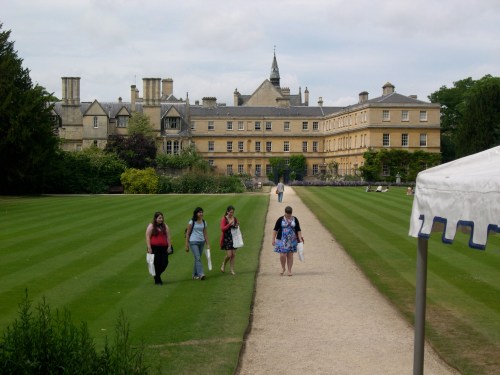
When classes are in session, crossing the lawn like this would, for most people, be met swiftly with bulldogs and police with batons. I guess they’re more lenient on visiting days.

Here’s the building that houses the Oxford Natural History Museum and the Pitt-Rivers Collection.

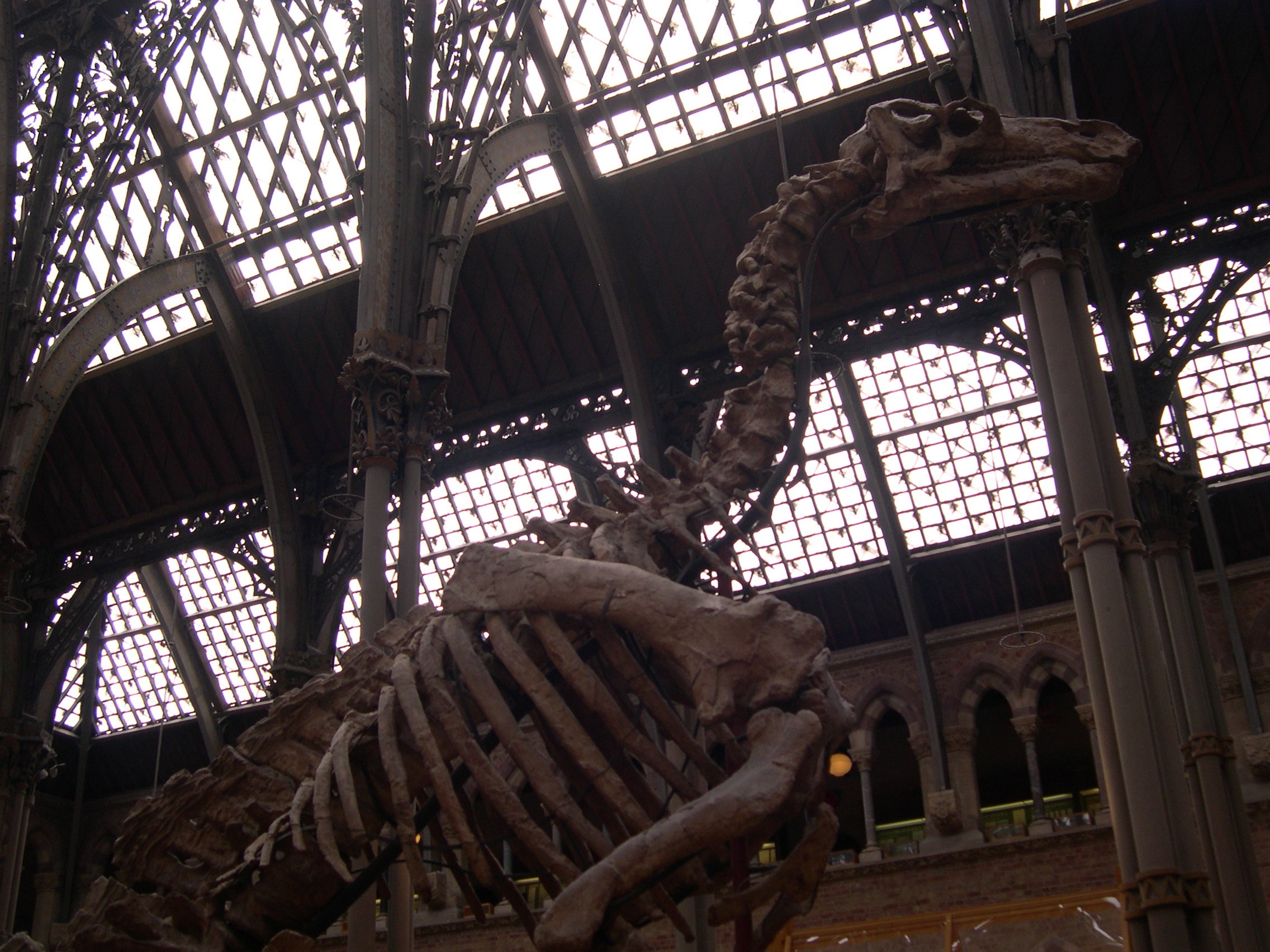
I walked through the natural history section to get to the Pitt-Rivers, and I could have stayed there all day. This guy greeted me just inside the door:
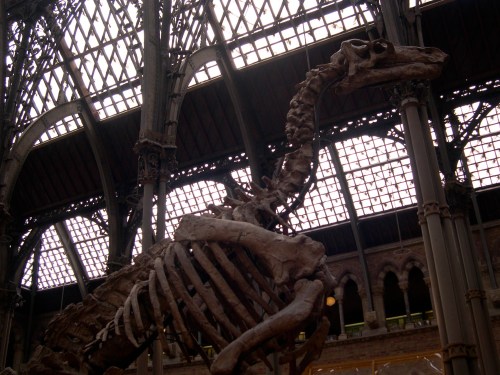
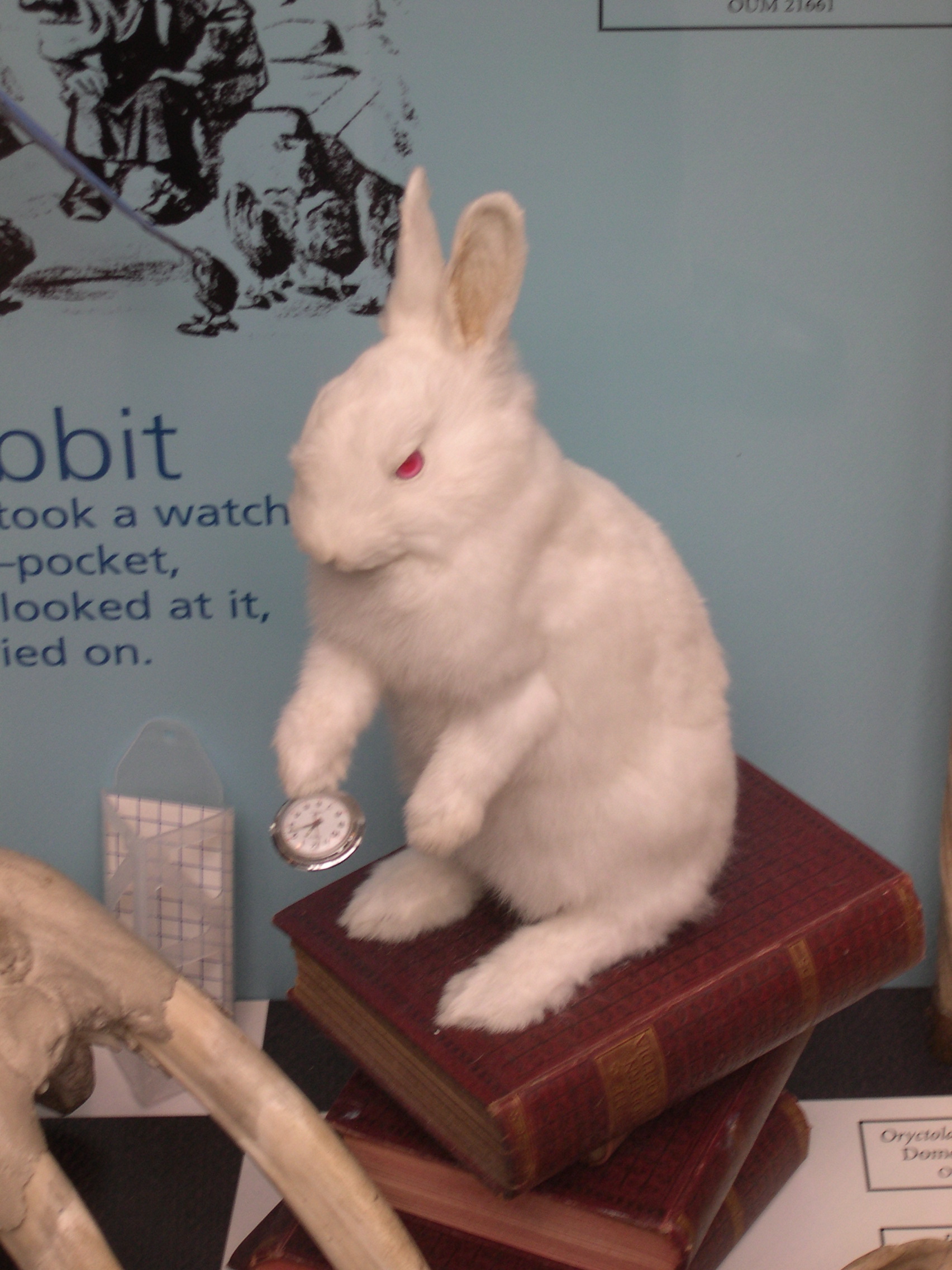
followed by his even larger friend, T-Rex. Just adjacent to them were the Oxford Dodo and the rabbit of Alice in Wonderland fame.

(Sorry folks, the T-Rex and the bird didn’t come out. I had some unfortunate data loss problems with a camera that I’m afraid has gone the way of the Dodo.)

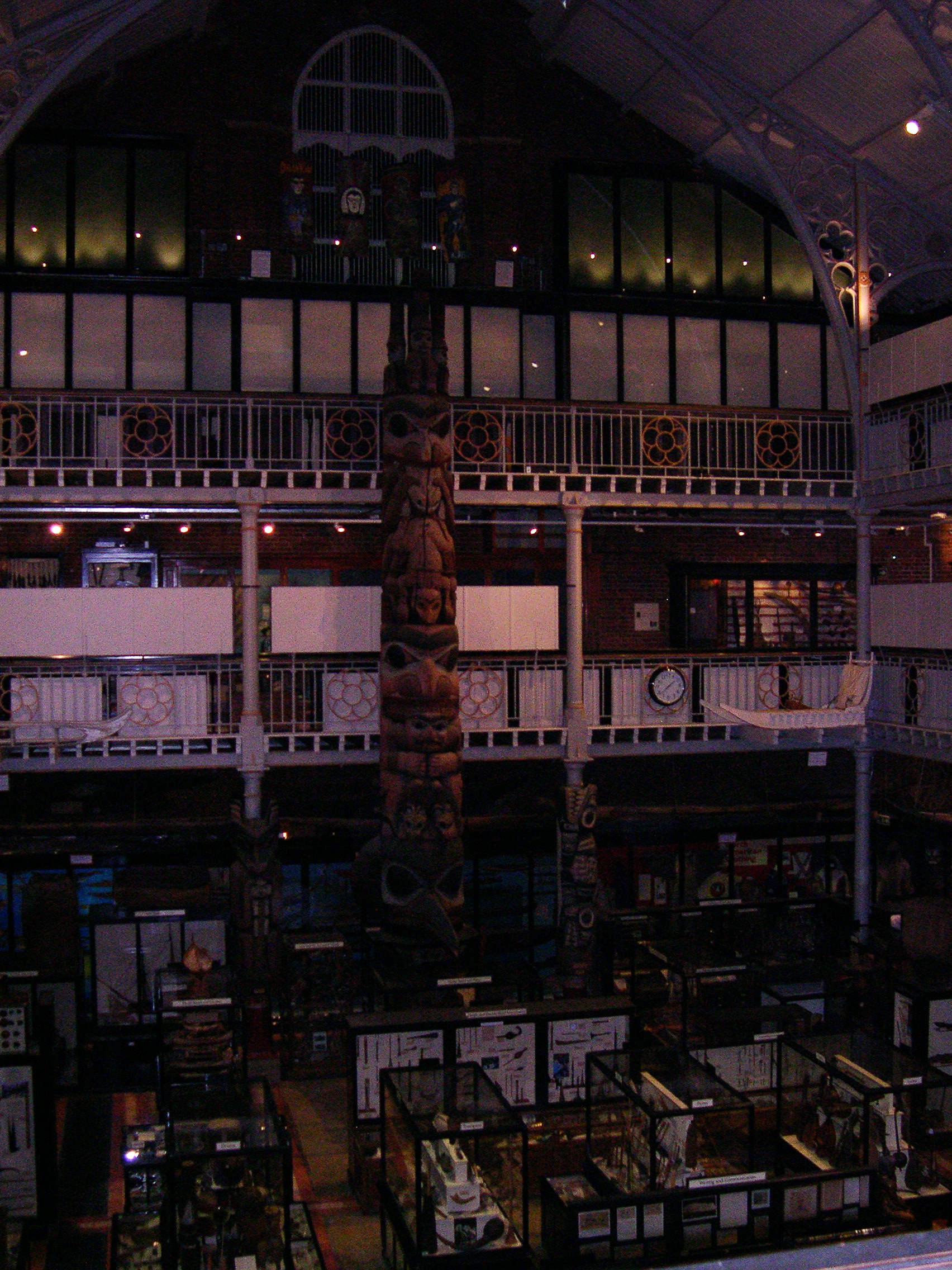
Upon entering the Pitt-Rivers Collection, I asked at the front desk to see my contact. As they called her, I feasted my eyes on this enormous collection of artifacts:
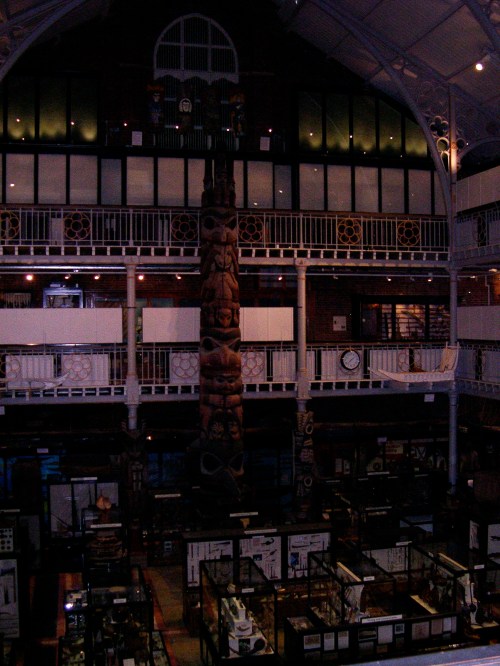
(Dork-out time.) It was almost sad to leave all of this in favor of an upstairs examination space where I would view some of the objects in closer detail, but I got over that when I got there. Through several secure doors and a final attractive sliding glass door into a newly remodeled ultra-modern study facility, my selections awaited under near-perfect natural light from the ceiling windows above. There was a royal drum from Bunyoro along with several ritual rattling idiophones from Bunyoro and Ankole in Western Uganda.

(Seriously, it only gets dorkier from here, but I can’t resist.) I had cited drawings of these rattles in my master’s thesis, but I had never seen them in use, on video, in pictures, or in person. Even more exciting was the realization that many of these objects had been acquired for the museum by none other than Reverend John Roscoe, an important early twentieth century missionary ethnographer of Uganda (the click-through on that one is worth a chuckle at some of his other “discoveries”). Even his original letters about the objects to Henry Balfour, who was in 1921 and for a long time the curator of the Pitt-Rivers, were there with typed transcriptions! What else should I expect for the museum that houses all of Radcliffe-Brown’s fieldnotes and symbols of Lewis Carroll’s Alice?

After photographing and taking notes on these instruments, we headed down to the music storage area to see some more. Fun as it was to examine these materials in the comfort of a well-lit study facility with large tables, it was equally fun to go into this dungeon of storage to dig out a few more treasures. Royal trumpets, ritual bells and horns awaited me there.

When we finished, I had a chance to go out on the display floor and poke around a bit. It’s quite 19th or early 20th century in its presentation. This museum and the research that fueled it for a long time were founded upon the principle that if we could collect objects from various cultures, they might be able to tell us something about the various stages of evolution in which those cultures simultaneously existed. Phrenology and unilineal evolution are dead now, but the organizaitonal method remains: these objects are grouped not by culture or region, but by type.

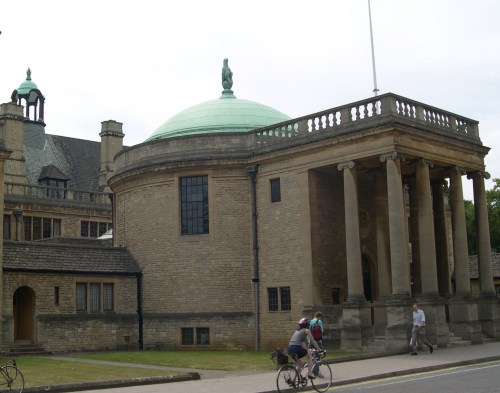
Out the back door of the museum and a short jaunt around the corner lies Rhodes hall (yes, that Rhodes).
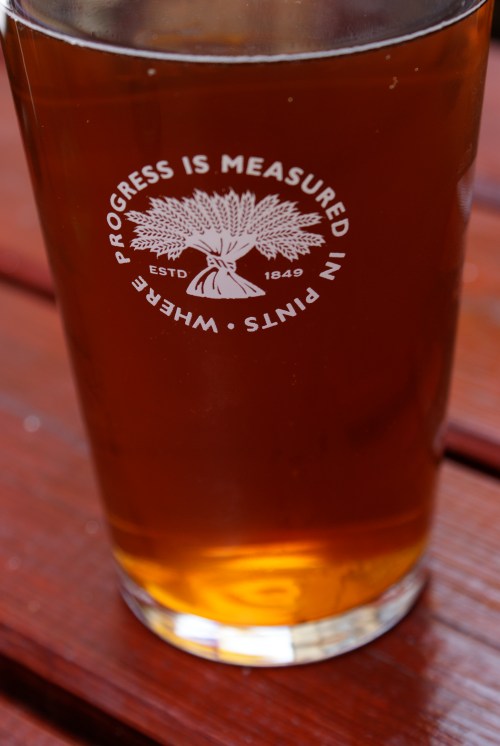
All my research wrapped up, I decided it was time to enjoy some good old English fish ‘n’ chips with a pint. I purposely got off the beaten path, where this simple fare all too often gets exoticized to the tune of 10£ or more. I found a pub with outdoor seating on Turl street, where I got my wish, along with the first beer I’ve had in months that wasn’t a lager. There I got exactly the experience I was looking for: Old Hookey Ale.
3 Comments

Filed under Uncategorized

Uganda Epilogue: the Boda-Boda Diaries

An unfortunate incident involving an upset taxi driver, his cheapskate conductor, their violently drunken barker colleague at the boarding stage, and some typically corrupt police prompted me on last year’s research trip to reconsider my primary means of transport in Uganda. Up until then, it had been the matatu, a 14-passenger van that rarely carries fewer than 16 people and more like 24 or 25 up-country. On my first trip and a subsequent journey, the otherwise uncomfortable matatu rides had afforded me opportunities to chat with locals, flip Luganda flash cards, and generally learn something about the everyday lives of Ugandans. During the rest of that last trip and all throughout this one I have relied instead on a more efficient, quicker, and decidedly more fun mode of ambulating through town and country in Uganda: the boda-boda.

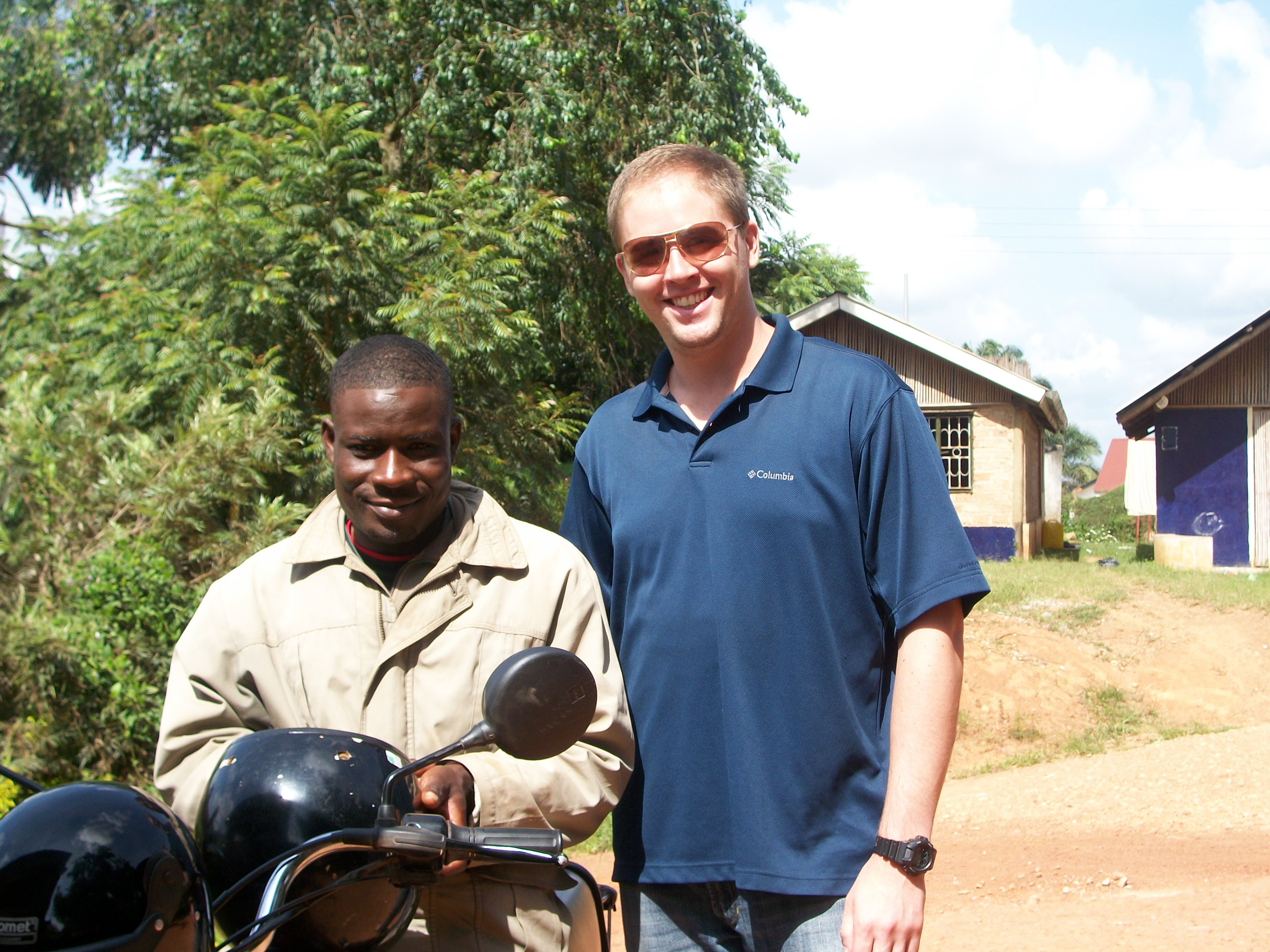
Meet Mark Kyaligamba, a.k.a. Marco: safest motorcyclist this side of Sub-Saharan Africa, loyal companion, and all-around boda concierge:

I met Mark last year on the recommendation of a colleague who had hired him on numerous occasions to do everything from running errands to transporting her safely wherever she needed to go, all without the unwanted romantic attentions commonly associated with many boda drivers. This is how Mark gets all of his business: he delivers people and goods safely and quickly to their locations, he charges a reasonable (read: not muzungu) price, and his happy customers recommend him to other clients. It doesn’t seem like this kind of work would be very lucrative, and indeed he’s not living in the State House, but at the end of the day he puts his two children in good schools and provides well for his family.

After six months plus of strict customer loyalty on my end and unfailing punctuality, safety, and general reliability on his, Mark and I have become very close friends. My host mother comes from his clan, making him my kojja (lit.: brother to my mother). As such, he calls me “son,” and he takes very good care of me. He carries an extra helmet all the time. He shows up five minutes early. He knows where to find good food, hard-to-find items, out of the way places, and quite a diverse collection of people. You never know how valuable this is until you need one or more of these things and Mark makes it happen.

Riding on the back of a motorcycle every day for this long makes for a particular kind of experience of Uganda. Matatus are great for talking to people, practicing Luganda, learning the polite manner of so many Kampalans even when we are all forced to sit on top of one another for the sake of functionality, and experiencing life as so many working people do. On a boda, however, the wise traveler gets to know one driver and maybe a few of his colleagues for the safety’s sake, and he sees so many things through the eyes of that small group of people. I have my own agenda in going places here, but going with that other person means learning a lot about the places we go together and the road along the way. For me, that person is nearly always Mark.

Hours away from the city though, things are different. Mark has other clients even when I’m there, and there’s no stealing him for a day to go up-country. By borrowing his bike a time or two for a price, I have found a really fun way to see some beautiful countryside. Similarly, my friend and teacher Ssematimba would commonly borrow a bike near his home and drive the two of us to other villages.

Uncle Ssema introduced me to his home and family over the span of several different trips. Andrew Mwesige, another friend in Busoga, did the same. I met their families and friends in Kyaggwe County and Namutumba District, from Nakifuma in the heart of Buganda to Nawandyo deep in Basiki land, where they taught me so much about drumming and song, ritual practice, and the basic way of being-in-the-world for rural Ugandans.

When I was a child, my father used to put me in front of him on a motorcycle. As I grasped the handlebars inside his own strong grip, he would take me all around Cedar County, Nebraska, where he grew up. There we met family members previously unknown to me, old friends of our family, and comerades in farming and life. On these more recent journeys, the nature of our interactions is so strikingly similar. One does not simply pass by a place without stopping to say hello. When people tell us that they are happy to see us—tusanyuse okubalaba!—we return the joy of that meeting, apologizing if we cannot linger to chat over a warm cup. The Baganda say, “mu nju, temuli kkubo,” meaning that, “in the house, there is no road.” A visitor is a blessing, and a host blesses him in return with warm hospitality. This is a familiar pattern to me; it parallels the grace of the people who live near my own ancestral home.

When companions of convenience or professional necessity care enough to show me the place where they live, to introduce me to family and friends, to open their homes and their minds and teach me about who they are, the journey becomes so much more than the destination. This road has been rich with such experiences. A boda-boda is not merely a faster or more efficient mode of transport, though it certainly can be; it is a means of getting to places where cars cannot go, on paths that always end in compounds filled with the warmth of sincere welcome. These paths are useless if they fail to map the human landscape of a place. Now that these fine friends have led me there on bodas, I truly know where Uganda is.

1 Comment

Filed under travel, uganda

On the Road Again…or Is This A Rollercoaster?

Leaving Uganda is more bittersweet than ever this time around.

I have been homesick for weeks and really wanting to be with my wife again. She’s three months pregnant with our first child, and I absolutely cannot wait to see her, share this joyful anticipation, go to appointments and classes, and prepare our home for a new addition to our family. It has been nothing short of heartbreaking to be so far away during the early part of this time, but I must say that she has been an absolute star. She has made every effort to include me in everything that’s going on despite the distance. With everything that has transpired in the last couple of weeks in Uganda, this is the face that keeps me striving homeward bound:

Jenn at Cape San Blas last July

It is depressing to know that when we return to this beach, it will soon be ruined by tar balls and other oil damage. I remember when we could stand up to our chins in the water and still see our toes. We have great memories of this and so many other places along the Gulf Coast. The spill will put a damper on the heart of beach season and far beyond, but our stolen liesure remains insignificant in the face of the enormous environmental, economic, and emotional devastation all across the Gulf Coast.

Although this can never detract from the excitement of a return home, I am also leaving a place I love and people who have become my dear friends, hosts, and adoptive family in Uganda. So many amazing events and happy times filled this research stint. We broke bread, danced together, and said goodbye to friends at Backpackers’ Hostel, my half-time campy home over the last six months:

Me with Marco, Boda Concierge Extraordinaire

We met new family members and blessed them to take our Ffumbe sisters into new homes:

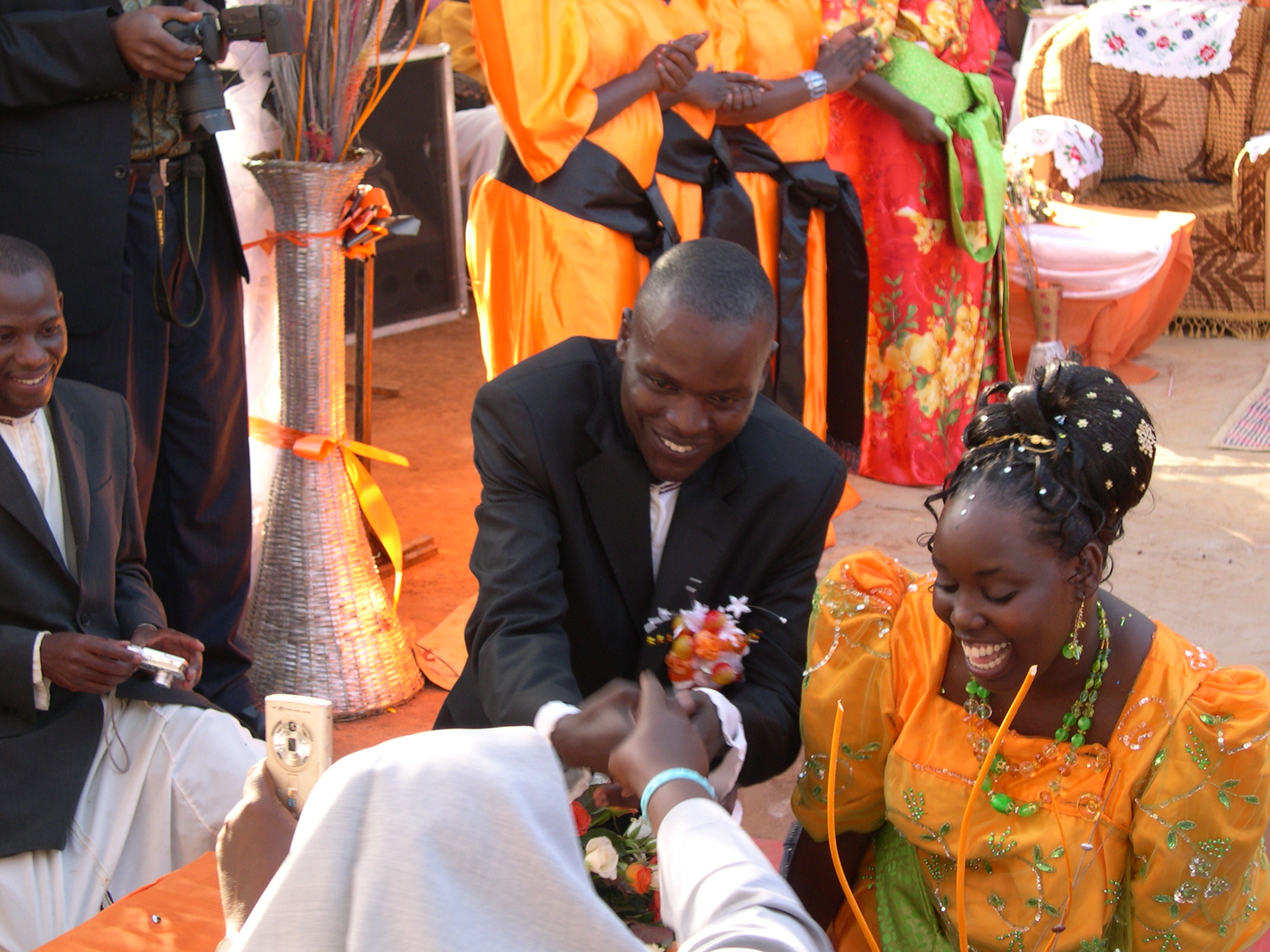
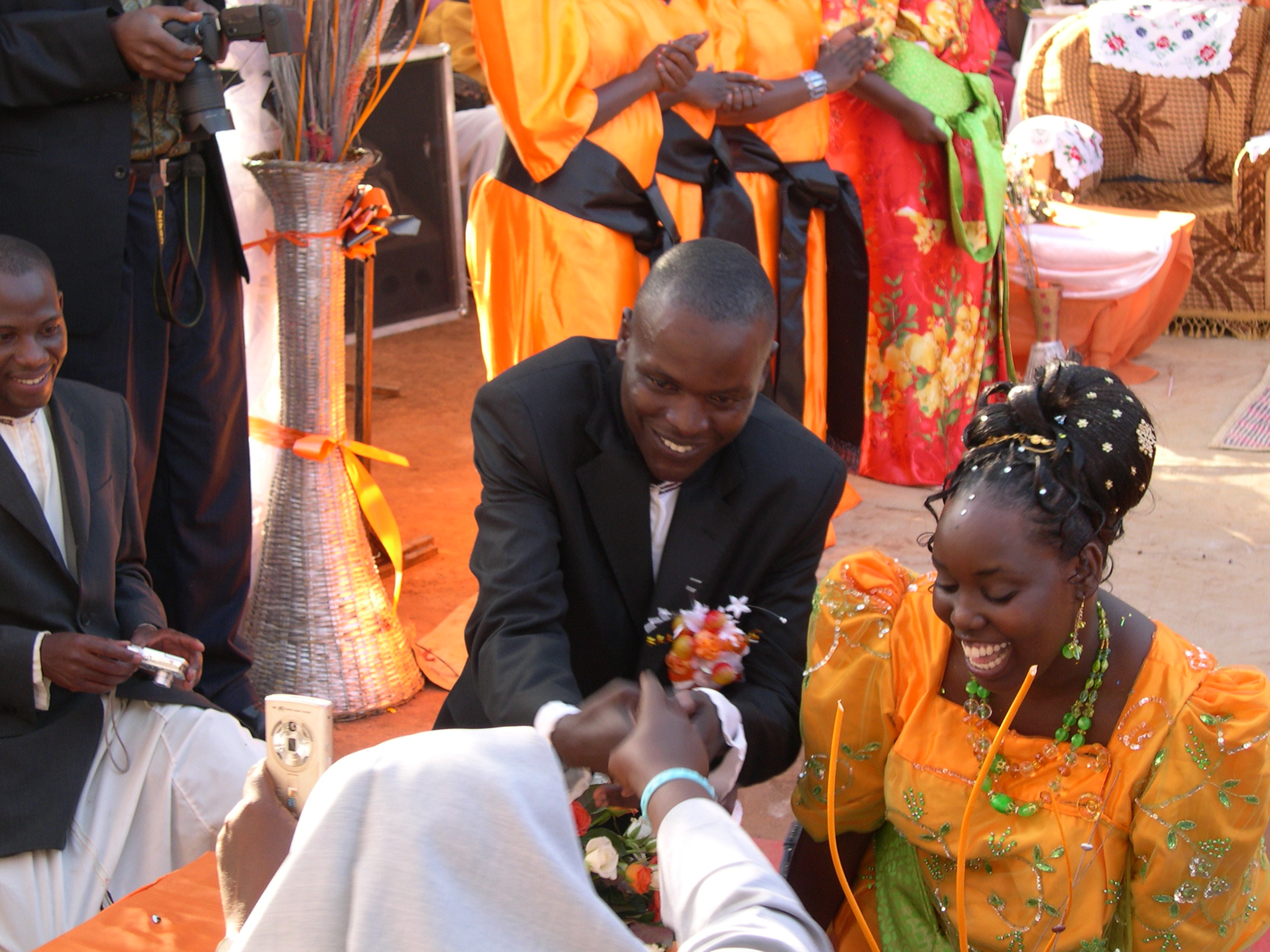
Christine Zawedde introduces her soon-to-be husband to her family

We marked these occasions, identifying with drum and song who we are and where we have come from:

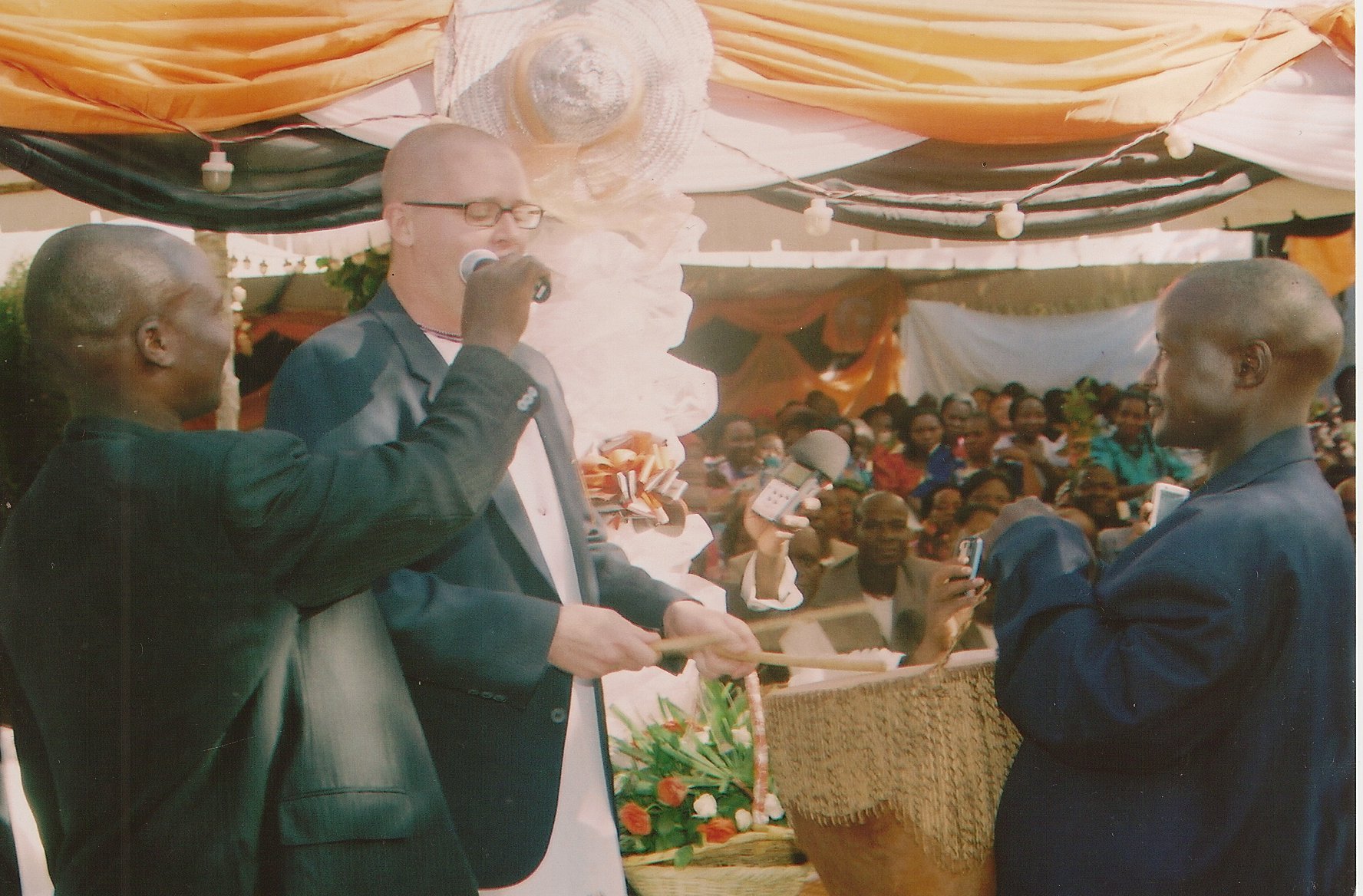
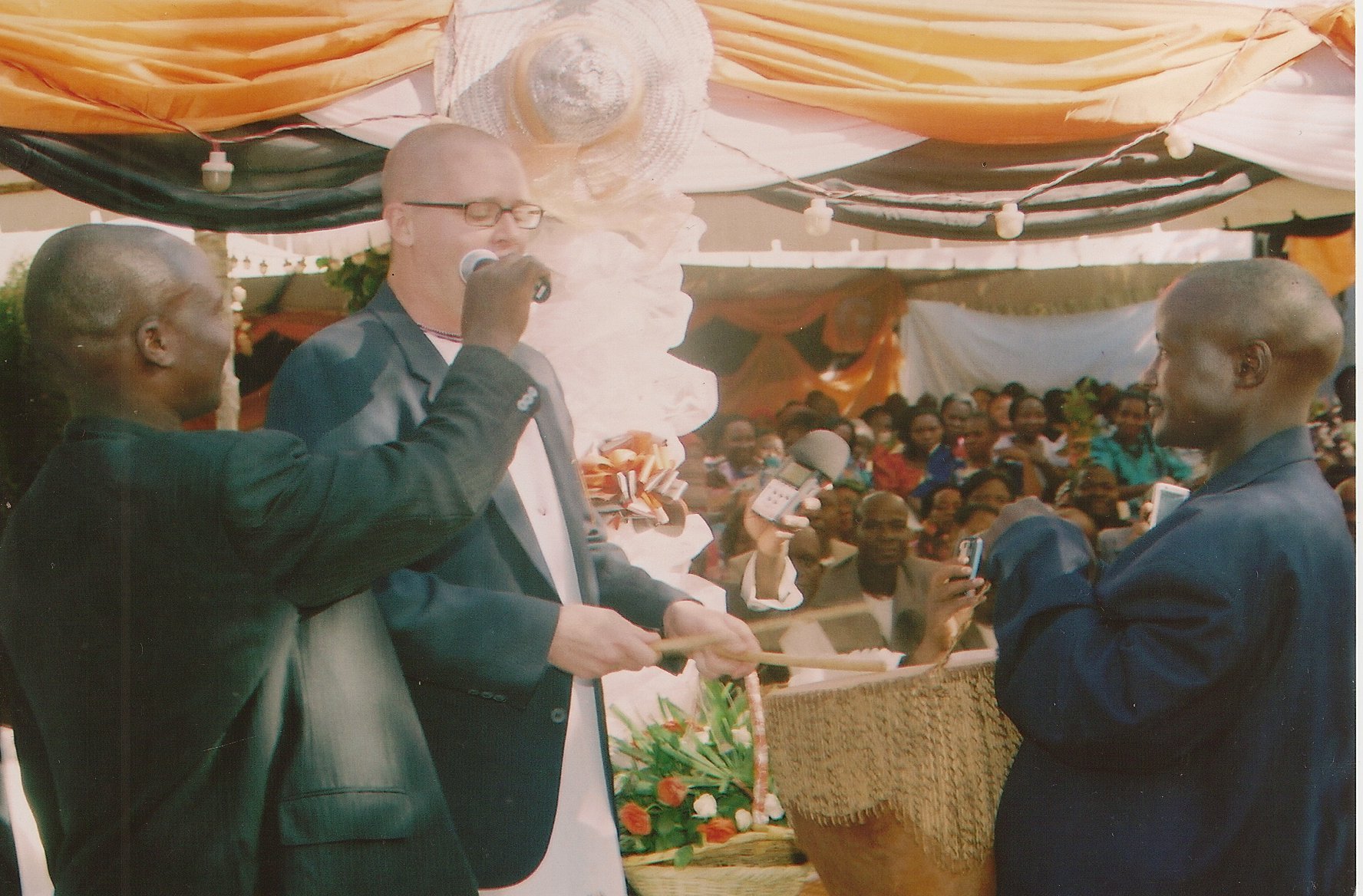
Me, playing the mubala (slogan) of Ffumbe clan

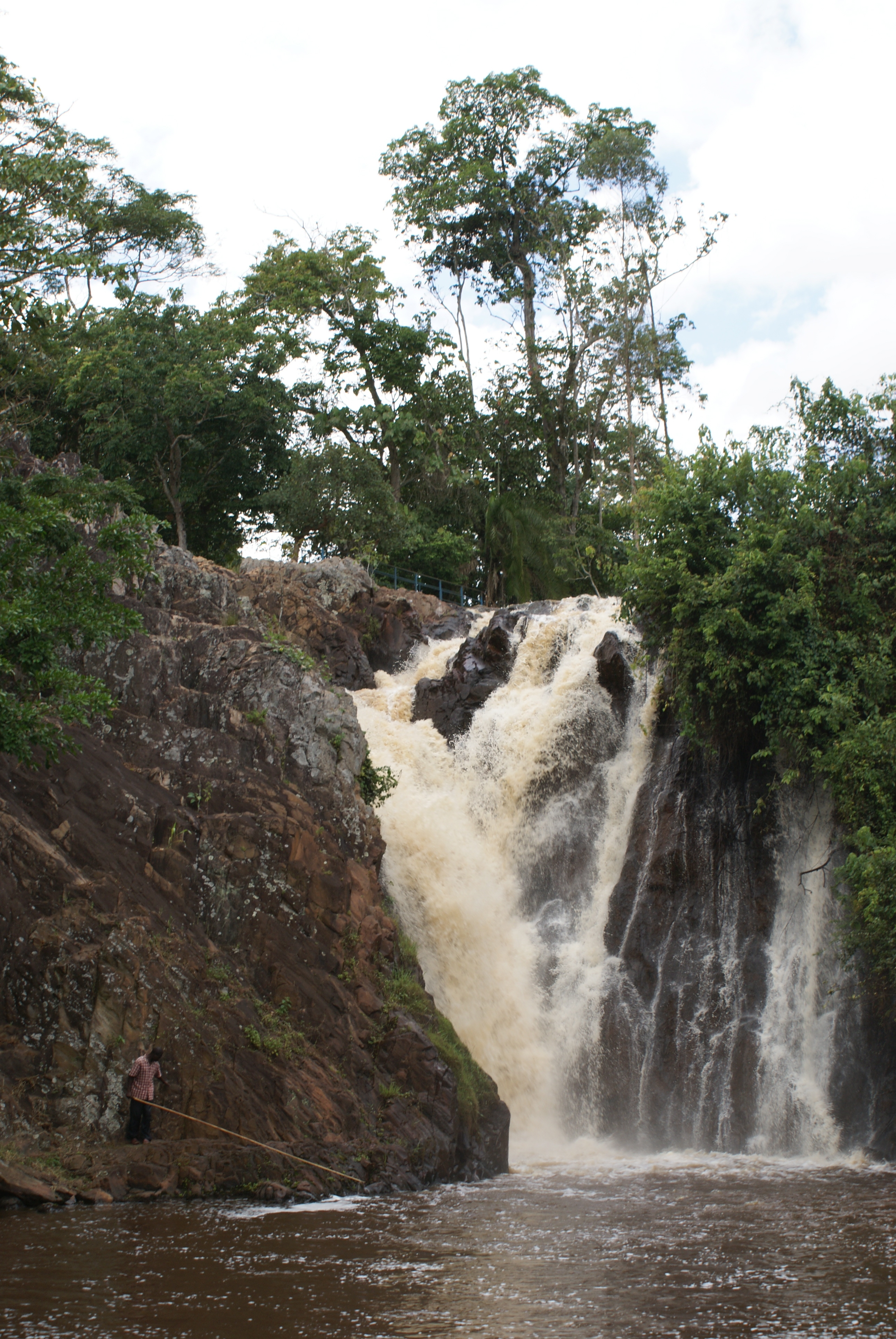
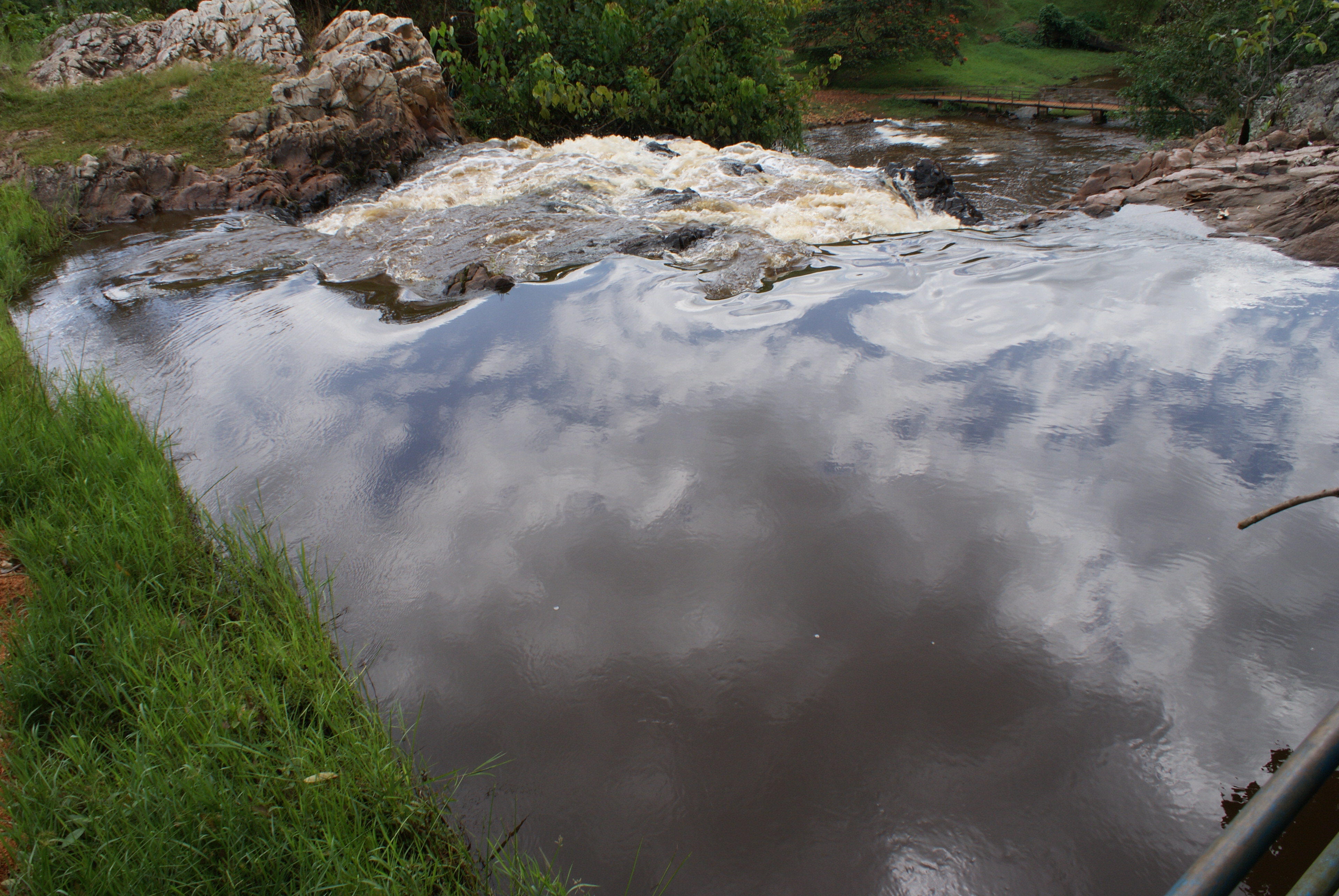
We saw beautiful places together and learned of their significance to locals:

Ssezibwa Falls from the bottom and the top

We refreshed our bodies and souls in the natural beauty of Uganda.

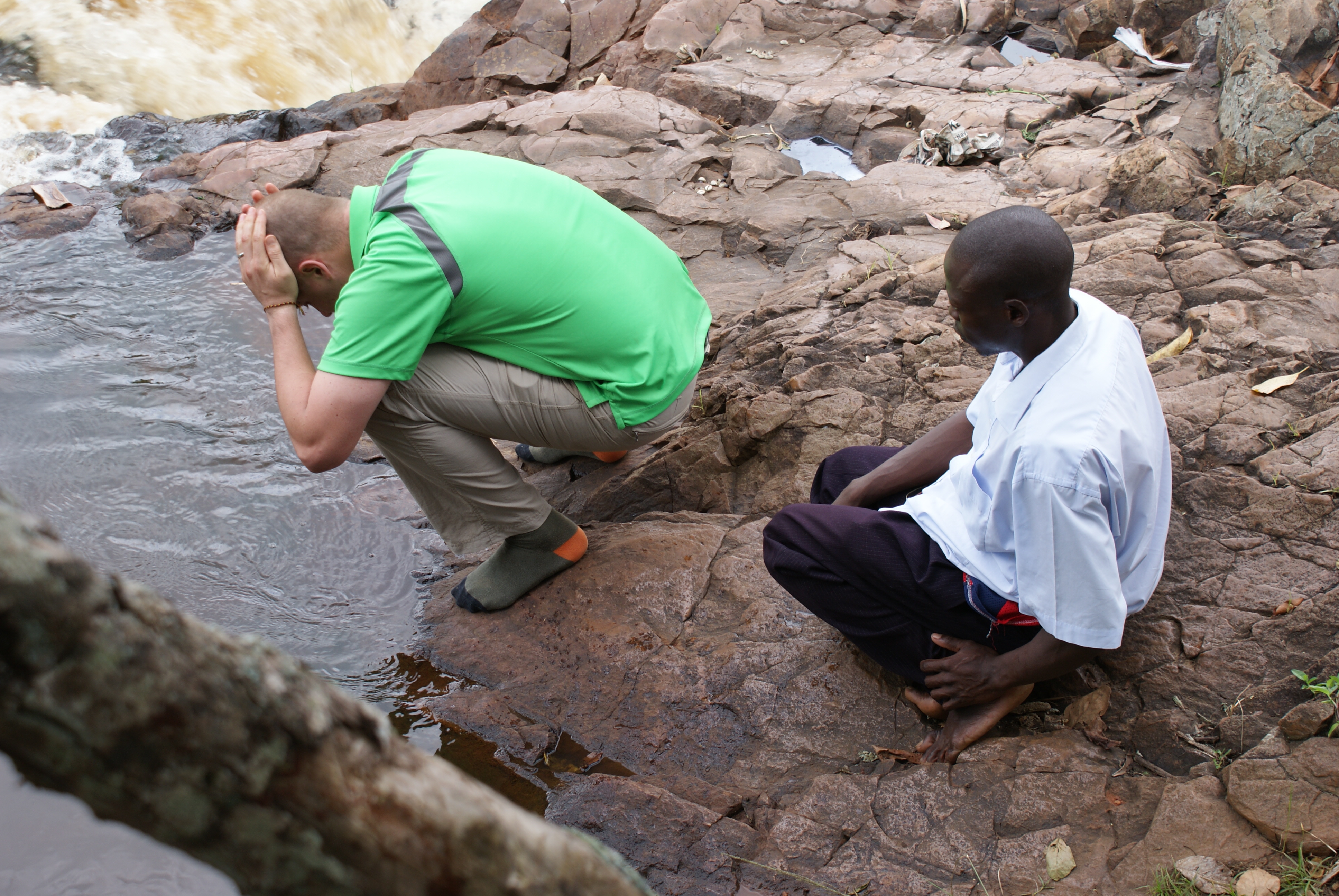
Ssematimba and me cooling  off in the Ssezibwa River

I have many stories to tell since I last posted, and those will come as I gather my notes, photographs, and recollections of this place. For now, this montage only scratches the surface of a deep and soulful journey that, like all others, must now come to an end. The return home is always a happy thing, particularly as I am returning to the excitement of new life and the promise of more interesting changes to come. So I know it will be a long time before I can return to Uganda, but I must say goodbye for now, fair friend.

Leave a comment

Filed under Uncategorized

Omupiira: World Cup Fever Hits Uganda

Kampala became quieter and quieter throughout the day yesterday as the second day of play took over a city that was largely glad to be away from work and in front of a television somewhere. ‘Tis the season for omupiira, soccer, futbol, WORLD CUP! It’s difficult to go five minutes without hearing someone hum K’Naan’s catchy anthem. Meanwhile, those who have no TV at home crowd around those in bars, restaurants, and beauty salons.

This kibanda style of viewing is the heart of World Cup in Africa. I was here in 2006 to watch as the Italians beat the French and Zidane beat his head into an opponent’s chest. Ugandans enjoy roasted meat in front of screens big and small with plenty of beer near at hand. Ghana plays tonight, which will surely bring the crowds out in droves.

I have two weeks left here, so I definitely don’t have enough time to watch every match. However, I can still get up early enough to get my work done and watch the big games. Even as I travel up-country this week, it will offer me interesting opportunities to come across how people experience this where there might only be one or two televisions for miles.

2 Comments

Filed under travel, uganda

A Meeting of Kin and Clan

When I first came to Uganda in 2006, I came to study Luganda intensively. I spent my days going to language lessons in the mornings and embarking on a wide range of adventures in the afternoons that provided me with abundant opportunities for practical application of the language. The teacher who so graciously allowed me to tag along on these outings soon adopted me into his clan and his family, and he has since been a most fantastic host father, trusted mentor, and loyal friend.*

The first time I met the broader Ffumbe clan, they named me Kigozi and welcomed me with some of the warmest hospitality I have ever experienced. Subsequently, I lived with Magoba and his family in Ntinda. During this time and since then, whenever I’m in the country it’s a matter of joyful social obligation to attend family and clan-related events. Parents here use the same terms for their nieces and nephew that they use for their daughters and sons, so there’s no such thing as extended family in the sense that we think of it. People are just brothers and sisters, sons, and daughters. That means every time one of those people introduces her soon-to-be spouse to her parents, gets married, graduates from something, has a child, or dies, I have the privilege of joining the Ffumbe clan for commemorative events and life-cycle rituals.

This past weekend, it was okwanjula, literally meaning “to introduce.” One of our sisters, Zawedde, was introducing her fiancee to her parents. This is a normal ritual for youth preparing for marriage here. The biologically related clanmates and friends of the bride gather at her parents’ home, where they await the arrival of the groom and his family. When they come, they begin an extensive set of complex greeting customs that eventually involve the exchange of dowry and the agreement between families that their children will marry.

Above: the happy couple greeting ssenga, an auntie of influence in the family.

At an earlier kwanjula, I had been asked on the spot to beat the mubala, a kind of slogan that every clan has. These are normally proverbial or riddle-like in nature, and they often identify the totem animal of the clan and/or outline taboos pertinent to that clan. Evidently I performed well, because Magoba asked me to come to Zawedde’s kwanjula to beat an extended version of the mubala for Ffumbe clan.

At the designated time in the proceedings, the muwogezi (lit. clever speaker, a kind of emcee/negotiator that both families must have for this event) called me to beat the following mubala:

Galinnya, galinnya e Bakka

Basengejja, banywa omwenge

Kasolo ki? Ffumbe!

Kakozakoza: tolikoza mu lw’effumbe.

Translation:

They climb, they are climbing at Bakka [hill]

They are straining [local brew], they are drinking beer

Which animal? The civet cat!

The one who dips his food in every kind of sauce: you shall not dip into that of the civet cat!

The last two lines of this mubala identify the ffumbe, or civet cat, as the muziro (totem animal) for this clan. The last line makes explicit the food taboo associated with this animal. Even one who eats all kinds of animals should not eat the bush meat or even taste the sauce of the ffumbe. There’s another connotation here, too: the food taboo parallels a sexual and marriage taboo whereby one member of a clan must not marry a member of the same clan.

Well, the whole thing was an even bigger success than the previous time. It’s all because of Magoba’s careful mentorship. It was he who taught me a deeper version of this mubala, he who invited me to perform it again. His habit has always been to thrust me into public situations to test my skills and encourage me to rise to those occasions.

Wattu musajja mulungi ow’effumbe, kitange kiganda: weebale kunsomesa ssebo!

My dear good man of the Ffumbe clan, my Ganda father: thank you for teaching me!

*Waalabyeki Magoba is a novelist, folklorist, magazine publisher and radio personality whose vernacular writing has had a huge impact on southern Uganda. His radio program, Ekyoto, offered 90 minutes of folklore-fueled fun for all ages on Saturday nights before CBS radio was shut down here late last year.

9 Comments

Filed under uganda

A Strange Twist on Kusamira Ritual

A little over a year ago, I started going to this place called Kakooge. It was unlike any other place where I had observed possession rituals called okusamira. Instead of drums made of cowhide and singers using ggono ornamentation, these musicians played with keyboards, guitars in the style of Franco Luambo and Koffi Olomide of Lingala fame, and drumsets with delightfully trashed-out cymbals. This was not the esoteric music of nighttime clandestine gatherings and village ritual; this was more like pop music, and in fact the people at Kakooge assured me that several prominent Ugandan pop musicians had been long time members there.

Surreal? Maybe, but definitely worth a follow-up or ten. Last month, I took a colleague to this place just to see what she made of it. Now, this colleague, a historian, had not been to the many village rituals I had. She came with completely fresh eyes, and I turned out to be very grateful for her perspectives on this whole scene. In the time since I had been there, however, things got more bizarre rather than less, so the whole experience was even more interesting.

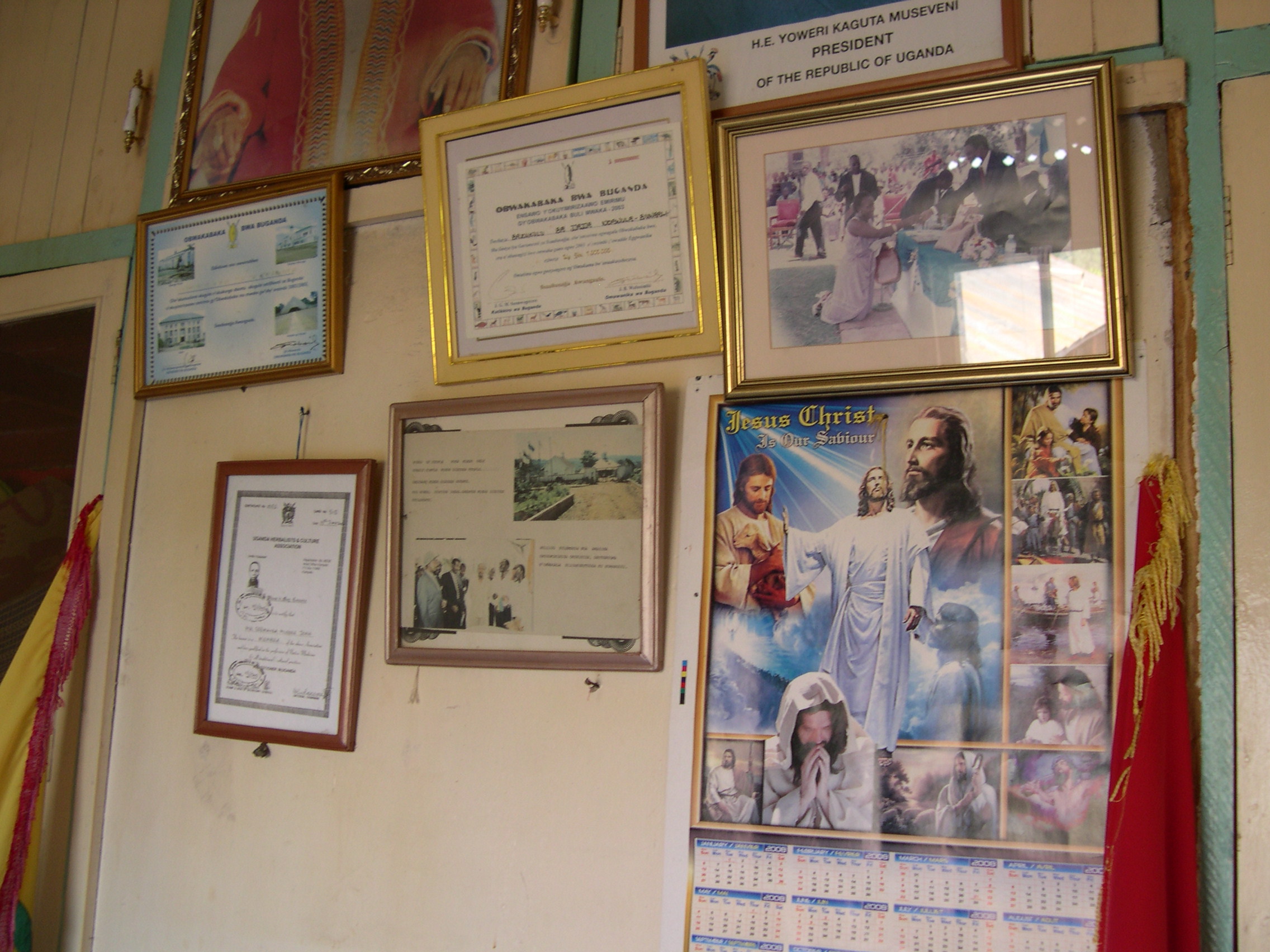
Inside one of about twenty small shrines, built for a spirit called Mukasa, there’s this eclectic melange of things on the wall. I look up and notice the particularly ironic portrait of Christ at this otherwise thoroughly polytheistic site of worship.

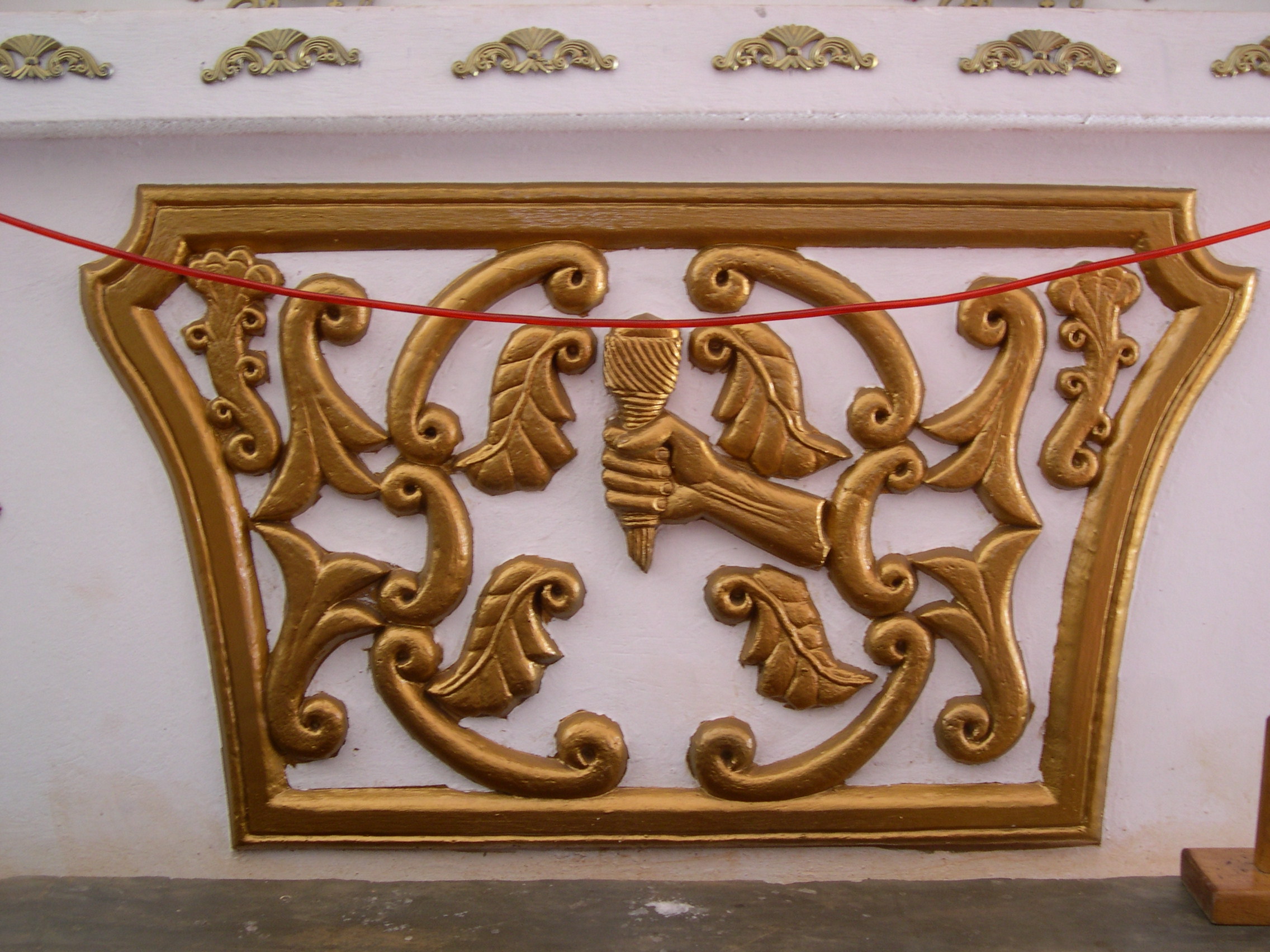
Inside the bigger shrine, there’s a large structure built in homage of Kiwanuka, the spirit associated with lightning and thunder who eats fire. He’s not unlike Thor in his association with his hammer and lightning:

Directly above this beautifully ornate depiction of Kiwanuka’s hand with his hammer, we find these:

So between people making the sign of the Cross, bowing on bended knee, putting forehead to the ground as they would at a mosque, there are also people dancing around in possessed ecstasy.

To top it all off, there’s this:

So where Muslim and Christian bodily practices play nicely in the same space, symbols of both traditions adorn the walls, and people become possessed by spirits of still unrelated nature over a backdrop of Hindu celebration of the Divine. Is this the music of God in all of her staggering diversity? All I can say is, “Bweeza Merry Krishna As-Salaam Aleykum!”

1 Comment

Filed under uganda