Category Archives: uganda

Travels With Nakayima, Part 9: Kalagala Falls, Uganda

24 April, 2009

I don’t have an abundance of stories from this particular trip, and the last post was long, so I’ve opted for more of a photo-essay on this one.  Enjoy!

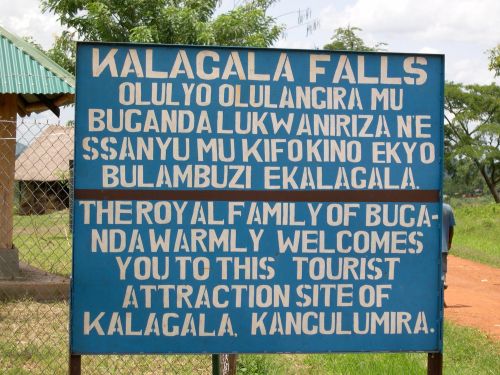
KalagalaSign

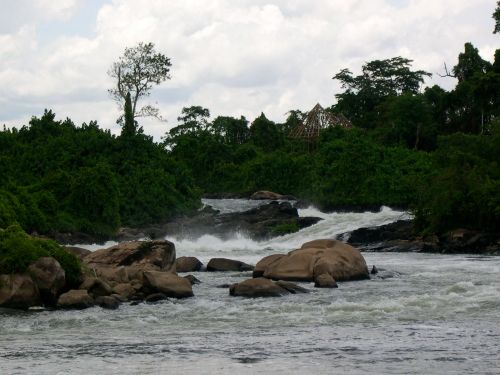
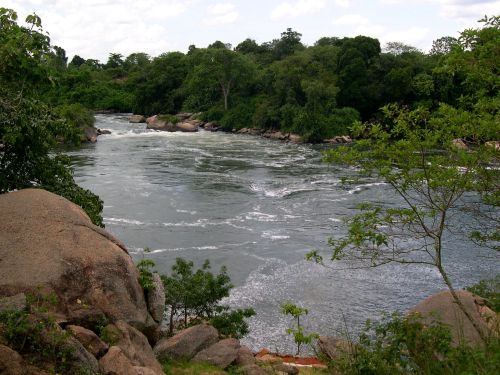
Another tourist site without any tourists.  People do come here for rafting, and for good reason as you’ll see, but with nowhere to stay, it’s not a very attractive destination for tourists…yet.  There’s a hotel being built even as we speak that overlooks the falls.

rapids

In this pic, I’m close enough to the water that you can see all of the various undercurrents working against each other.  I wouldn’t want to swim in this, but a raft would be fun.

rapids2

rapids3

rapids4

rapids5

mayinja

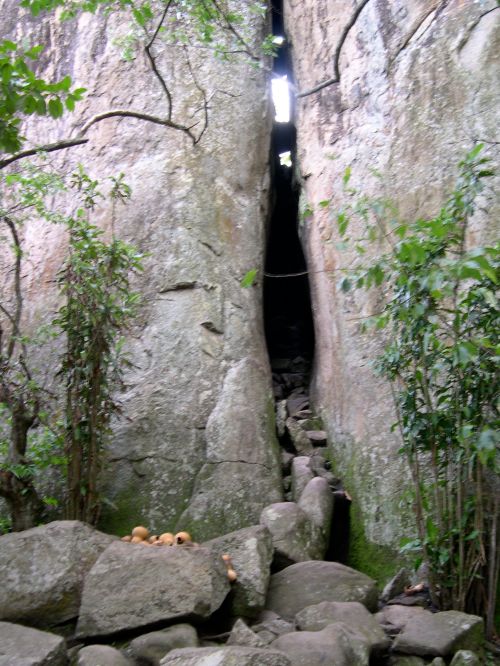
Near the water, there are some impressive rocks, some of which are huge.  There are also caves in the rocks where people leave offerings for spirits.

cave

endekucave

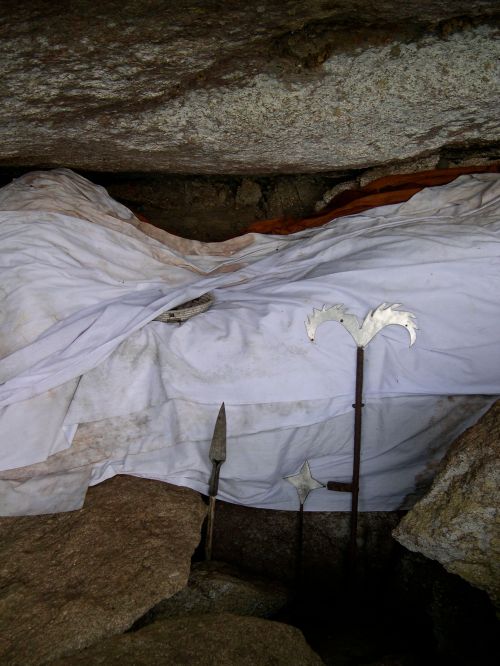
barkrocksThen there are some very hallowed rocks.  People who cover rocks like this normally say that it’s the spirit of the place who instructed them to do so.  They take this very seriously; bark cloth is not cheap.

essaboFinally, the ssabo (shrine).  People have started putting tin rooves on these because in the long run, it means less upkeep.  It also deters vandals, who have an easier time burning down thatched-roofed huts than tin-roofed buildings.

That does it for the travels with Nakayima for now.  There are a couple of other journeys with other folks that I would like to tell you about in upcoming posts.  Stay tuned for those and for a special farewell to Uganda post.

Leave a comment

Filed under uganda

Travels With Nakayima, Part 8: Kookola, Uganda

15-16 April, 2009

If Mubende was an exercise in long-distance futility and frustration of purpose, what I am about to share will reveal the consolation I feel from two much more useful days following that trip.  We set off to the east on a trip much like the other trips I’ve taken with Nakayima.  The taxi speeding along at breakneck speed on a narrow dirt road, I go through a now normal routine of just praying we get there and back alive.

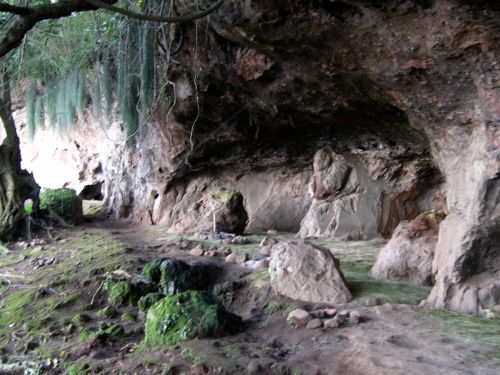
Today we’re on our way to Kookola, a village in Buikwe county on the edge of Lake Victoria.  When we arrive, a man named Jjajja Kookola leads us through his compound.  It’s filled with ebyoto, each a fireplace dedicated to a different spirit.  We move out of the compound into a large grassy field overlooking Lake Victoria.  It’s gorgeous.  Once past the field, we move down a small rocky hill to a huge cave.  There’s a nice view of the lake, and the breeze from the lake into the huge rock is absolutely glorious.

KookolaLakeside

KookolaCave

We sit on the soft grass in the cave briefly, but the hosts won’t have it: someone hurries to bring mikeeka (woven palm mats) for us to sit on.  There are a few ladies sitting nearby in gomesi and gentlemen sitting nearby in kkanzu, i.e. they are dressed up for something.  As we sit and chat, we discover that the village, parish, sub-county, and county chiefs have come together for a meeting today.  They have invited the Minister of Culture for Buganda Kingdom, who will be coming shortly.  These leaders are so busy asking me questions that I hardly have a chance to ask them about this meeting before it begins.  Eventually though, the questions taper off.  Because nobody ever starts anything on time, I’m afforded a moment to gather some information.

To make a very long story of this day and its antecedents shorter, this place has been desecrated.  “Savedies,” as Baganda like to call them, or Born-again Christians, came to this place a few weeks ago without permission to enter the cave.  They took all of the ritual accoutrement from this large cave, including spears, baskets, cowries, matembe seeds, offerings to spirits, and bark cloths, and threw it all into the lake.  It was an act of vandalism that these “Savedies” justified by enlisting Christ on their side of an ongoing social battle in Uganda that they see as a battle for souls.  I sit appalled, listening to this story from the locals, wondering how anyone can justify such symbolic violence by reference to the most tolerant and patient person in human history.  I have heard other mediums refer to “Savedies” as trouble-makers before.  I have even heard that they burn down massabo shrines, but I have never seen the aftermath of such behavior.  The people here are devastated.  It would be like members of another religious community going into a Christian church and throwing out all of the crosses and bibles.

The Minister of Culture arrives.  There’s a whole lot of pomp and circumstance, and we have to change places in the cave to accommodate a central place of importance for him.  As guests, however, we get a seat up front where we can hear his speech well.  He knows Nakayima, and he asks her to start off the meeting properly.  She sings:
Ssewasswa akazaala abaana,
Ssewasswa akazaala abalongo!

This common song for the twins starts off many official functions.  It’s part of a repertory that must be sung in multiples of two to start rituals.  She follows with three other songs, also for the twins, and I quickly write down the titles.  I’ve been following her habits on this for some time now, and it seems the combination of songs is never quite the same.  She just chooses from a body of songs and sings them in even numbers.

When the Minister of Culture begins his speech, he’s outraged.  He promises to take this problem to the Prime Minister of Buganda and send a memo to the President’s office.  He speaks for nearly an hour and then fields questions from a crowd of over one hundred people, most of whom live here in the area.  People applaud him long and loud, after which it is time to complete the part of the function that makes any occasion official: the eating of food (this could explain the large crowd).

Back in Jjajja Kookola’s compound, the men and women of the village serve everyone food.  The Minister of Culture has brought beverages for all, a major contribution considering that he probably had to pay more for that simple luxury than all of the food cost for this whole crowd.  We enjoy a hearty meal, after which people disappear quickly.  This is how functions work in Uganda.  “Food and drink,” a Ugandan friend once said to me; “those are the only reasons people really attend weddings and other functions.  If there is no food, there is no function.”

When most of the people have left, Nakayima asks me if we can sleep in this village tonight.  Considering the magnitude of this meeting, I decide right away that she’s got a good idea: stick around for a while and see what more we can learn.  The next day, we agree with Jjajja Kookola to see the rest of the site.

In the morning, I wake up to see Jjajja Kookola nursing a bottle of gin at 8:30 in the morning.  ‘Only in Uganda,’ I think to myself, and he soon leaves the hut in order to see some clients who have come for his help.  He’s not exactly a healer, but like other spirit mediums, he divines the causes of many problems and offers people his counsel.  It begins raining as he leaves, which is just as well; we have outside activities planned.  When he returns, it’s time to begin.

We move out of the hut and down to the lake, where we must each bathe privately.  (Evidently this particular journey starts off with skinny-dipping.  I haven’t had a real shower, so I’m down with that.)  In all seriousness, the point of this exercise is to have a quiet moment with the spirits of the Lake, namely Mukasa w’enyanja.  We then move into the cave where we were yesterday.  He shows us several baskets in the places where larger shrines with more ritual power objects used to be.  Then we move to a series of smaller caves on top of this one.

Once there, Jjajja Kookola shows us the places where people make offerings for Ssaalongo, Nnaalongo, and balongo (Father of twins, Mother of twins, and the Twins).  Since we’ve climbed up this far, we take a bit of a rest and Jjajja Kookola smokes his pipe.

JjajjaKookola

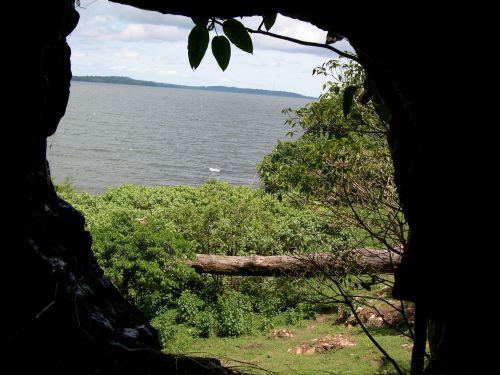
The view from up here is really beautiful, and we can see how large and complex this rock is with its system of caves.
ViewfromCave

ViewfromCave2

After Jjajja has finished with his pipe, we move up another level, which takes us to a large hill.  Beyond that, there’s a huge field of rocks.

FieldofRocks
At some point in our walk through this field, Jjajja tells me not to take any more photographs.  We travel about a kilometer further, and we stop.  Nakayima has brought two bottles of beer and several eggs.  These she leaves at the rock dedicated to Nnaalongo, the archetypical Mother of Twins, as an offering.

On the way back, Jjajja Kookola tells us not to do any more site visits for a few days after leaving here.  The place has a kind of meditative calm to it.  I don’t know if it’s the lake or all of the ritual sites in one place or what, but that’s the feel of this place, and maybe it has something to do with the custom he refers to.  He doesn’t really have a satisfying answer when I ask him about it.  Like so many other things, it’s just how people do it here.  More importantly than any of that, Nakayima has given me a window into how an official function NOT dedicated to kusamira performance works in a ritual location.

These two days have also given me an opportunity to see how some of the contemporary conflicts among religious groups affect communities.  In Uganda today, traditional healers become scapegoats for many people, including rival religious groups and journalists.  Among other things, they get blamed for so-called “ritual” murders, child sacrifices, and bodily mutilation.  While there is a small cadre of FGM practitioners in Eastern Uganda, these are not medicine men or mediums even closely associated with the kinds of musical and ritual practices that occupy the focus of my study.  Moreover, many of the stories that the newspapers run end up as follow-ups that identify healers as the first responders for many of these crimes, not the perpetrators.  Furthermore, avid readers of this blog might remember my post about the Uganda n’eddagala lyayo annual meeting, where healers uncovered a police plot to frame healers for a brutal crime.  All this is to say that the level of animosity “Savedies” feel toward traditional healers and spirit mediums may well be biased by this kind of scapegoating.  One thing is for sure: people cannot solve social problems by creating more social problems.  The continuing meetings in this place and the sounds of these songs testify to the tenacity of these rituals and their practitioners.  If colonization and the first wave of missionization through Uganda could not eliminate them, a new Born-again movement will be ill equipped to stamp them out now.
Leave a comment

Filed under uganda

Travels With Nakayima, Part 7: Mubende, Uganda

14 April, 2009

WitchTree
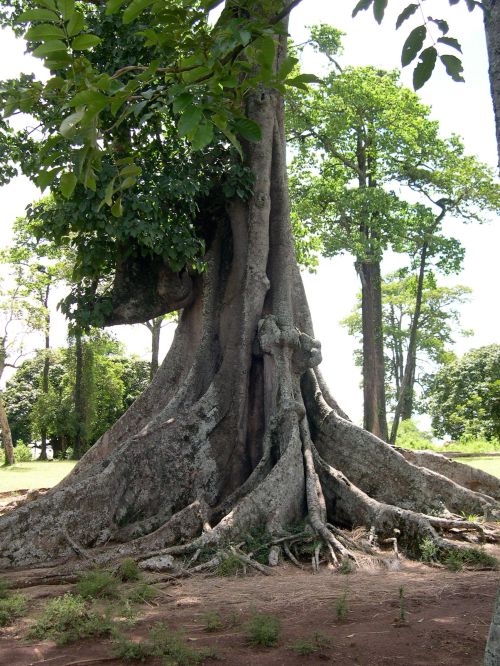
Today it’s off to Mubende!  I’ve been looking forward to this trip ever since my first visit with a colleague from another university who had done archaeological and ethnographic work there.  She described it as such a cool place, and the medium as such a cool lady, that it really inspired me to pursue this as a venue of research.  There’s a gigantic tree there that symbolizes fertility (for cows and humans).  It’s a remnant of the spirit Ndawula/Ndahura and his medium Nakayima and the Bacwezi herders’ presence on Mubende Hill.  It’s kind of a long trip, and I didn’t get a whole lot of sleep last night, so I sleep most of the way there.

After breakfast, and we end up in a small cosmetics shop run by someone Nakayima knows.  She offers us a glass of water and a seat for a bit, and she tells us what we should bring up the hill with us: milk, coffee berries, and small change.  These things we acquire through errand runners as we sit there in the shop, a luxury afforded to those who have money to send someone like that.

Two boda drivers agree to take us up the large hill, and these boys can’t cheat us because Nakayima’s friend knows them.  Once up the hill, we’re in a village called Bomaire Nakayima (Boma for short), named for the first medium to occupy this place.  Nakayima was a medium for Ndawula/Ndahura. a mucwezi herder.

There’s a big sign about 100 meters from the big tree that says “Nakayima Tourist Site.”  ‘Great,’ I think to myself, ‘another tourist site.’  I hadn’t expected to be jaded like this, but the whole Ttanda experience left a bad taste in my mouth.  It just seems so unnecessary to foul up the scenery with a big sign when very few actual tourists come to these places anyway.

We barely get done with greetings before the medium is taking us through prayers.  This woman, whom Nakayima calls “Jjajja,” calls herself “Muzuukulu wa Nakayima” (the grandchild of Nakayima).  To my surprise, she wears a rosary around her neck.  It reaffirms once more for me that ancestral veneration, Islam, and Christianity are by no means mutually exclusive domains.  We empty the small plastic bags of milk into two containers and begin to open all of the mmwanyi (coffee berries), dumping them into baskets.  Jjajja instructs Nakayima to drink from the milk and offer it to the spirits.  She then picks up the basket, places four coffee berries into her hands, and begins the prayer.  When she finishes, we go across the large root to the left and she says a similar prayer in the next crevice of the tree.  In each of these, she addresses a different spirit.  We continue in this fashion all the way around the tree.  The prayers go something like this:
Jjajja __________________, tukusabire
(Grandmother, we pray you)
kutuwannula, otuwe ku mulimo,
(we come and you give us work)
n’azadde,
(and offspring)
n’abaana,
(children)
n’amaka malungi.
(and fine houses)
Tukwebazza…
(we praise you…)

After each line, Nakayima repeats what the old woman has said.  No matter what else she says, these few lines seem fairly consistent with each spirit.  It’s all about getting fruitful work, bearing children, and having a home for them.

When we finish with the tree, Nakayima wants to feed fires for Nakayima (the spirit) and Kiwanuka.  We’re instructed to move up the hill a bit, where there’s a man selling chunks of wood.  It’s kind of like lighting a candle in church, it seems.  He chops us off a few small chunks of wood, which my traveling companion feeds into the fires for Nakayima, Kaliisa, and Kiwanuka.  The one for Kaliisa, it turns out, must be fed with cow chips from around the compound.

When we come back to the tree, there’s a man there who offers us some of the bananas that he’s brought from town.  He came in a car, so Nakayima asks him for a ride back into town.  After that, things move too fast to really get anything done here.  I don’t even get a chance to ask Jjajja when and if people beat drums and sing here.  I’ll have to ask Nakayima later, I suppose.  Little do we know that this man is planning to go all the way back to Kampala.  He’s only in Uganda for two weeks, on leave from his job as a chef in London.  He’s made time to come here and bring these offerings to Jjajja Nakayima, which means this must be pretty important for him.  He speeds all the way back to Kampala, making me wonder about how good an idea it was to go with him.

Most of these site visits give me useful context relating to the people and places where kusamira performances take place.  I have to say that today was disappointing on two levels: first, I had been looking forward to this for two years, and then I learn today that the most recent medium has been dead for most of those two years.  Then I don’t even get a chance to ask very many questions.  I resolve that even if I don’t get to go back to all of these places where Nakayima is taking me, I must return to this place when I have more time.

11 Comments

Filed under uganda

Travels With Nakayima, Part 6: Ttanda, Uganda

DeathDoor

9 April, 2009: At Death’s Door in Ttanda, Uganda

In the beginning, according to the Baganda, there was a single man named Kintu.  He roamed the earth with his cow, but he was lonely.  When he looked to Ggulu (lit. “the heavens” or Tonda, lit. “Creator”) for help, he noticed that Ggulu had a daughter named Nambi.  Nambi watched Kintu do his work from her comfortable home in the heavens.  She noticed that he was strong and he did his work well.  They eventually fell in love, but this was a forbidden love, as gods cannot marry humans.  Kintu knew this; Nambi did too, but it didn’t keep her from approaching her father about it.

Naturally Ggulu resisted Nambi’s pleas to allow her to marry Kintu, but Nambi persisted.  One day, Ggulu finally agreed that they could try it, but Kintu would have to perform several tasks to his satisfaction first.  Ggulu began assigning these tasks to Kintu with the confidence that Nambi would see him frustrated and give up on her idea.  However, Kintu completed each increasingly difficult task with great strength and skill.  Even Ggulu was impressed, and so he finally acquiesced and Nambi got her wish.
When it came time for Nambi to leave home, she gathered her things and went to greet her family goodbye.  They first went to her father, who warned them to pack lightly and leave quietly so that Nambi’s brother Walumbe would not give them trouble.  Walumbe was a troublemaker, and Nambi had never gotten along with him.  He also warned that they could never come back for any reason, even if they forgot anything.  Kintu, happy to have a wife, agreed to Ggulu’s wishes and thanked him for looking out for them.

Kintu and Nambi set off for earth together, putting Ggulu behind them and Walumbe out of their minds.  Halfway through the journey, Nambi panicked.  She had forgotten the millet for feeding her chicken.  She had to go back and get it.  He didn’t like it, but she insisted.  She hurried back home and got the beans, but just as she was leaving, Walumbe showed up.  “Leaving without saying goodbye to your dear brother?” he asked.
“Walumbe, I’m so glad to see you.  You were gone when we were leaving, but I forgot these beans, so I came back,” she explained.
“You avoided me,” he responded.  “Why did you avoid me?”
“No really—“
“Let me come with you.  I can protect you along the way,” he said.
She could not resist him, and she would now have to bear the look of shame on Kintu’s face when they met him on the road.

Back on earth, life went on though.  Kintu soon forgave Nambi because he was no longer lonely.  They produced children very quickly, and they lived and worked happily together, Kintu with his cow, Nambi with her chickens and the children.  One day, Walumbe came to Kintu to ask his muko (brother-in-law) to send him with one of his sons to help him with the chores around the house.  Remembering Ggulu’s warnings about Walumbe, Kintu refused.  Walumbe was very angry, and he could not understand Kintu’s refusal of a simple favor.  That very night, he went and killed Kintu’s son.

Kintu was outraged.  He reported directly to Ggulu, who had little sympathy for a stubborn son-in-law who had ignored his warnings.  He pleaded with Ggulu, blaming the whole thing on Nambi for returning to get the millet for her chickens.  Reminded of the grief his daughter must have been feeling, Ggulu decided to send one of his other sons, Kayikuuzi, back to earth with Nambi.  He instructed Kayikuuzi to persuade Walumbe to return to heaven.  If he refused, Ggulu told Kayikuuzi that he would have to bring his brother back by force.

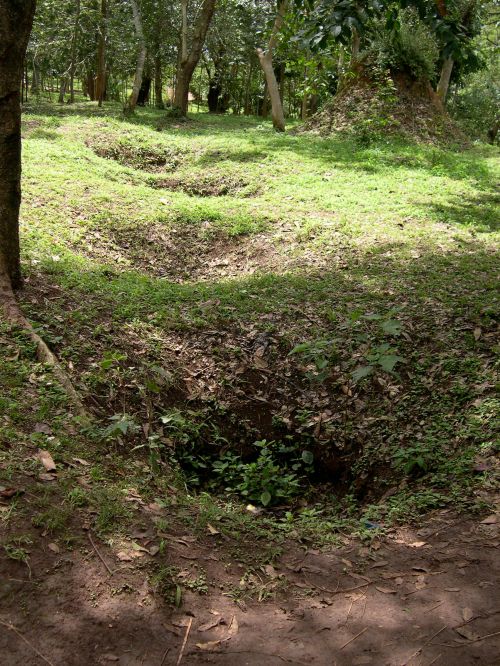
When they returned to earth, Walumbe proved to be stubborn.  Kayikuuzi tried and tried to persuade him, but Walumbe turned a deaf ear.  “I like it here on earth, and father cannot force me to return home,” he told his brother.  Kayikuuzi would have to take him by force.  He was the stronger brother, and he nearly overpowered Walumbe.  However, at the last second, Walumbe sucker-punched him and disappeared into the ground.  Kayikuuzi (literally means digger of holes) went after him, digging huge holes to try to find him.  Walumbe kept escaping and hiding in new holes, hoping to tire his brother out.

After several days, Walumbe succeeded; Kayikuuzi was tired of digging.  He went to Kintu and Nambi and told them, “I am going to try once more to get Walumbe.  You and your family must stay inside.  Keep your children well, and don’t let them make any sound if they see Walumbe.”  Kintu and Nambi followed their instructions, but one of the children was lost and he remained outside.  When Walumbe came close to the house, he ran screaming into the house to meet his family.  Kayikuuzi was just behind, but Walumbe had already disappeared into the ground again.  Kayikuuzi rebuked Kintu and Nambi sharply, furious that they had ruined his chances of catching Walumbe.  “He’s your problem now,” he told Kintu.  “I’ve done all I can.”
“You have done more than enough,” he told his loyal muko, embarrassed that his children had fouled things up.  “Go back to Ggulu and we shall deal with Walumbe.  If he continues to kill our children, we shall simply have more.”  And so Kayikuuzi left Kintu and Nambi on earth with Walumbe, the bringer of sickness and death.

There are many versions of this story, but the basic plot is the same.  Walumbe is a kind of angel of death for the Baganda.  He’s not like Satan, though his rebellion from Heaven seems similar to the Christian stories.  He’s more like Death itself, associated with pestilence, disease, and ultimately a trip underground.  The holes that Kayikuuzi dug and Walumbe hid in remain at Ttanda in Ssingo county, Uganda.

Ttanda

AmaffumuGaWalumbe

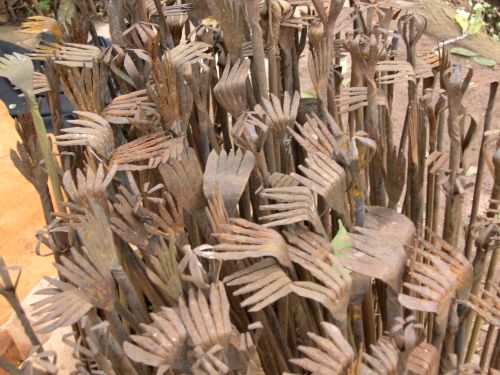
Amafumu ga Walumbe: Walumbe’s spears

EffumuLyaKayikuzi

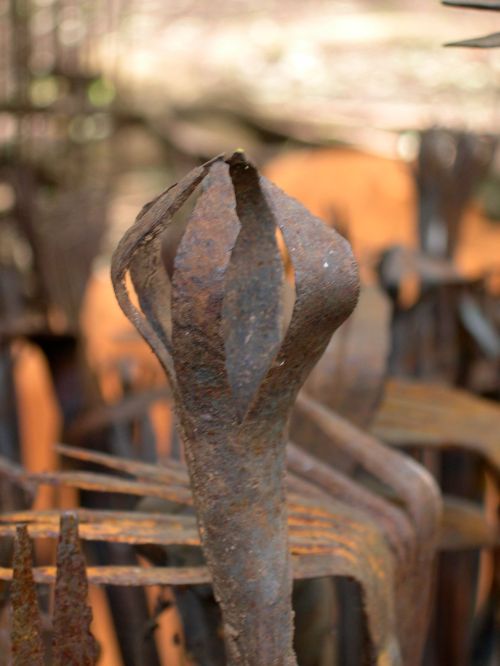
Effumu lya Kayikuuzi: Kayikuuzi’s spear

These remnants of the great fight between Walumbe and Kayikuuzi remain.  People bring new spears as offerings and remembrances of the battle.  Walumbe’s presence remains, as does Kayikuuzi’s, but the Baganda also remain.  “Abaana ba Kintu tebalifa kuggwaawo,” they say, which means that “the children of Kintu will never be destroyed.”

People often bring cloths to cover the holes, a symbolic barrier between human life and inevitable death.  Ttanda has become somewhat of a tourist site, but it remains too far off the beaten path to be ruined by things like gift shops.  People still come here every Saturday for kusamira, possession rituals.  I have yet to be present for one, but perhaps on the next trip…

3 Comments

Filed under uganda

Travels with Nakayima, Part 4: Buyego and Kungu, Uganda

6 April 2009: Buyego and Kungu, Uganda

KawumpuliShrine
Today we’re on our way to Buyego, a town in Luweero district north of Kampala.  There’s a shrine for Mulangira (prince) Kawumpuli there, a Ganda prince who was born with no arms or legs.  As with many of the other shrines we’ve visited in Buganda, the boda-boda drivers in the area know the place well.  That doesn’t stop them from throwing Nakayima off the bike on our way up the large hill. It always makes me nervous when women ride “side saddle” on these motorcycle taxis to guard their feminine image.  I have never actually witnessed a boda accident, though a friend of mine required reconstructive dental surgery after one…needless to say I am shocked and frightened for my dear traveling companion. Luckily she comes out with only a few scratches.  A spray of hand sanitizer later, she is back on the boda, still riding side saddle.  By the time we reach the top of the hill, she has forgotten all about it.

The photo above shows the main gate in front of a large ssabo (shrine), a regular thatched-roof hut full of all manner of ritual paraphernalia and thick with the smell of pipe tobacco.  Nearby there’s an outdoor shrine dedicated to Kiwanuka (the Ganda diety for fire, thunder, and lightning) under a tree with a red cloth wrapped around it.  A caretaker asks us to bathe using the water from a small nsuwa (clay pot) containing water infused with herbs that the main musawo (healer) here has prepared.  At Ndejje, they do this the old way: the caretaker drinks from a small bowl of this medicinal water and spits it on people as a blessing.  Here we just bathe by dipping a branch into the water and splashing it on our faces and shoulders.  When it comes to required ritual bathing, I prefer the latter method.

We then sit outside the main ssabo for an introductory mukago ritual.  Mukago is a cultural reference to an old tradition of making a blood pact.  Two people open the skin on their bellies near the navel with a knife, dip coffee berries in the blood, exchange berries, and mingle each other’s blood with those berries.  The way people do it now, they still call it mukago, but there’s no cutting involved.  We simply takes berries from the basket with both hands, throw some on the ground for the ancestors, and eat some.  People commonly offer coffee berries to guests in Buganda, but I have only ever heard this referred to as mukago in the context of massabo shrines.

A short time later, we move into the ssabo, where we meet Mumbejja (princess) Buyego. the main spirit medium in this place.  She sits, smoking her pipe, near the central load-bearing pole of the large hut.  Nearby there are large pots containing honey, and bees swarm around them.  she ignores them for the post part, but tells us that these bees come to visit her every morning.  We take tea and talk for a while, which is always a good opportunity to ask questions.

When we go outside to sit in front of the outdoor Kiwanuka shrine, Nakayima offers ekigali in the baskets there.  Ekigali is an offering of coffee berries and money for a spirit, usually offered when someone first approaches a shrine.  She also stokes the nearby fire in the kyoto, praying as she does both of these things.  Once she sits down, it’s apparently time for a post-tea smoke.  She has left her pipe home, so she asks Mumbejja Buyego to borrow one.  They bring an ornately decorated pipe that doesn’t look like any of the pipes I have seen elsewhere.  Those are usually used for specific spirits when they possess people, but this one appears to be focused on the pleasure principle.
mmindi
That said, it doesn’t escape me that this pipe has been decorated in using a beading style consistent with some of the royal paraphernalia, including the Kabaka’s scepter.  This place, like many of the other shrines we’ve visited, displays all kinds of references to royalty.  This is primarily an association of their patron spirits with royalty of the past.

We don’t stay at Buyego very long; Nakayima has an agenda today, and it includes at least one more site visit.  We end up at a place that I am at this point unaware will be the first of many significant shrines in this region that revolve around large rocks.  We remove our shoes at the top of a large hill where the rock begins to dominate the topography, and we climb up to a place where Nakayima can make another kigali offering to Kungu, the main spirit in this place.
Kungu
I’ve been trying my hardest not to crack jokes about this picture (oops), because it is a rather remarkable place.  You can see several endeku (gourds for local beer) near where the baskets are.  These are all for offerings to the spirit of this place.

Nearby there are several other small areas dedicated to other spirits: Kiwanuka (fire, thunder, and lightning); large similar rocks for Ssaalongo and Nnaalongo (parents of twins); Nakayima (a mucwezi herder) and Ddungu (the hunter); among others.  The caretaker, a very helpful man named Kiwalabye, tells us that while there is nothing happening today, people come quite often to beat drums and sing here.  I resolve to come back for that, and we bid Kiwalabye farewell.

What I don’t yet know as we leave is that this will be one of many places that I will probably not be able to visit again on this trip.  Nakayima is giving me a really good idea of the places and contexts for this music, even if we don’t experience mikolo (ritual functions involving music) at all of them.  The music itself does not change very much from place to place, meaning that it might not be all that important to return to each and every place.  In a couple of short weeks, she’ll be completing the picture by connecting the repertory I have heard at so many shrines with its specific spirits, objects, and purposes.  For now, I am left with a rather nervous resolution to return as soon as possible, even though I know I am running out of time to do so.  I think the feeling of running out of time is something every fieldworker experiences, but as anthropologist Paul Stoller has stressed, that’s what makes it interesting to return to the same field sites year after year.  He’s studied ritual in the same places in West Africa for several decades, and his work speaks for itself.  If I am able to return to some of these places more in the coming years, I will be interested in seeing how my impressions of this repertory (and even the genre itself) change over time.

1 Comment

Filed under uganda

Travels With Nakayima, part 3: Ndejje

28 March 2009 (later that day): Ndejje, Uganda

NdejjeEssabo

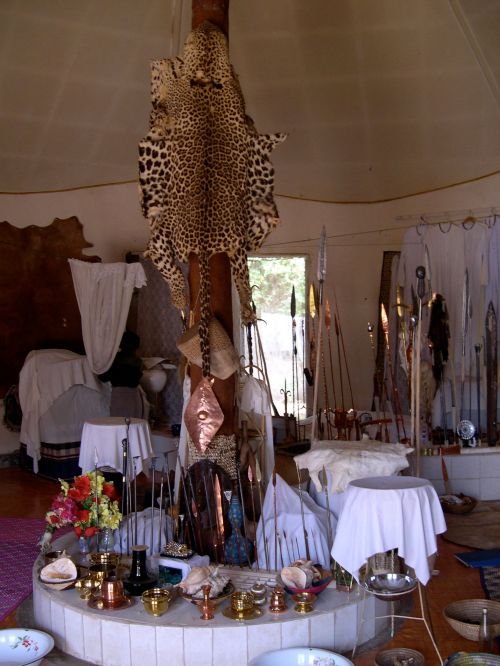
Nakayima and I linked up this morning with Nakigozi Nabawanuka at a place called Ndejje.  I must admit that until I knew we were on our way to Bakka, I didn’t want to leave this place.  The main ssabo or shrine had captured my curiosity with its abundance of ritual paraphernalia.

So naturally I am pleased as we return to this place early in the evening.  By now I am accustomed to seeing these things: leopard and other animal skins, spears, and bark-cloth.  But I have never seen this much or this wide a variety of ritual power objects in one place.  I am also pleased that they allow me to take some pictures of them.  I have only ever been in one other ssabo this large, and that was in Busoga (eastern Uganda).
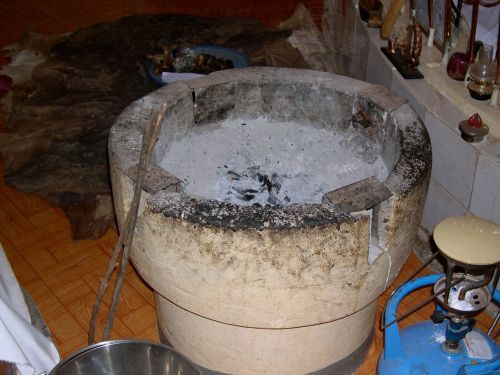
Behind the main pole you see in the picture above, there stands a stone kyoto, a fireplace where people burn wax incense during prayer times.
kakyoto
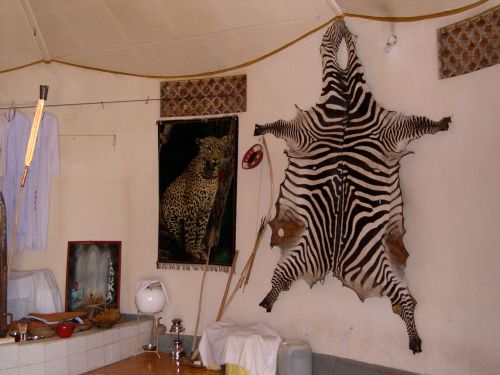
Behind that, a row of spears cordon off the back section of the shrine, where there are images of various ancestor spirits and baskets where people make offerings and venerate these ancestors.  On the far right end of all of this, there’s an image of a leopard, a symbol of kingship and the preferred form for several spirits to take in nature.  Next to that there’s a zebra skin, something I have never seen in a ssabo or anywhere else.
Zebra
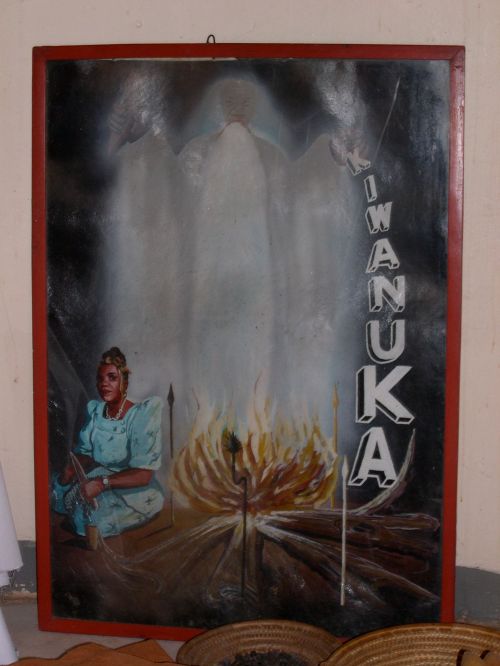
On the other side of the leopard tapestry, there’s something else I have never seen anywhere: an image of Kiwanuka, the deity associated with thunder and lightning who eats fire.  Nakigozi Nabawanuka tells me that Kiwanuka is white like me.  The name Nabawanuka comes from Kiwanuka, and this is one of the spirits who possesses her, so she speaks with a certain authority on the matter.  Take a closer look at the image:
KiwanukaPoster
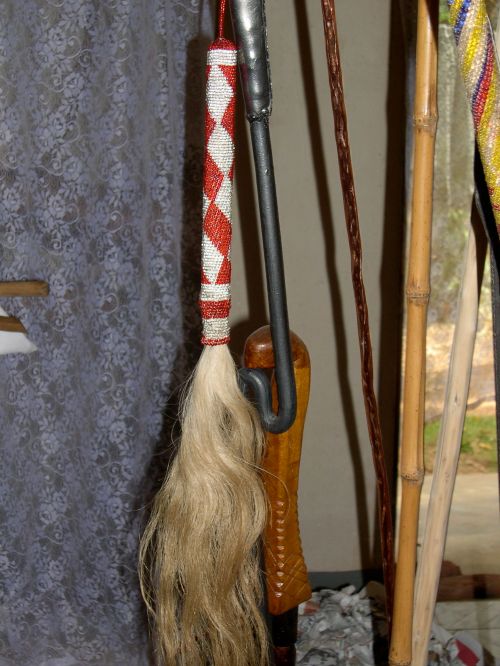
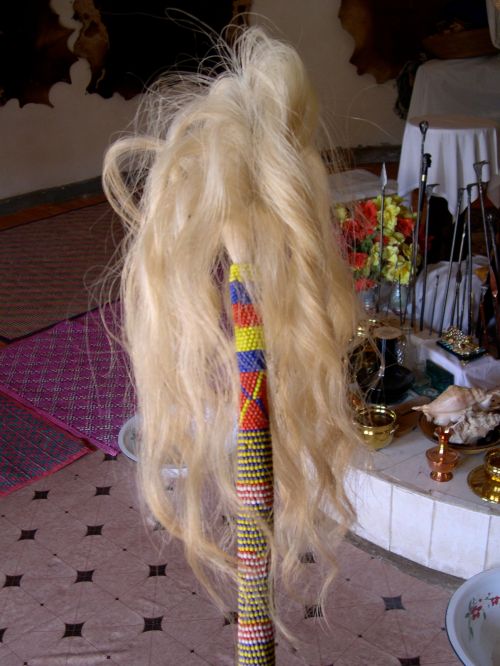
What’s interesting to me here is that this image is clearly recent.  Nobody else has ever described Kiwanuka as white or muzungu (or even albino for that matter), and the poster is no older than this place (about 15 years).  And yet, some of the other things around this place come from much older traditions.  For example, one of the objects I notice on the row of spears near the back of the ssabo is called enkinga.
enkinga

and here’s another…

enkinga2

Nabawanuka tells me that people who are ill can beat these ornate fly whisks over each shoulder to chase away the spirits that cause their afflictions.  She does not call herself a healer (omusawo w’ekinansi), but consistent with many of Buganda’s shrines, that does not stop people from coming here to seek healing through spiritual means.
There are other remnants from the past here: below, a pair of traditional sandals rests next to the ancient board game, mweso.
mweson'engatto
Again, as in many shrines, I see no shortage of tobacco pipes in this place.  Each of these in the basket is for a different spirit:
Emmindimukibbo
When people get possessed with those spirits, the spirits request their specific pipes, and Nabawanuka must have them available.
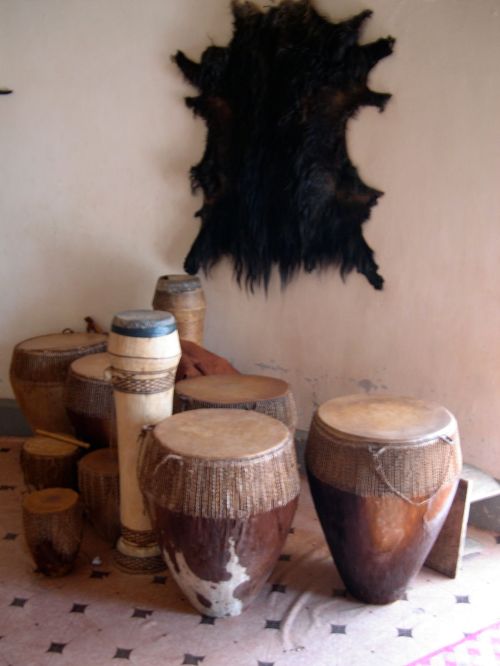
As I move outside to check out the rest of the site, I take note of the many drums in this place.  Unlike the one hanging on the central pole of the ssabo, these in the corner clearly get used on a regular basis:

engoma

Like Bakka, this place is home to several other ebyoto (fireplaces) and amassabo (shrines) apart from the main shrine.  There is one for the royal spirits where women are not allowed to tread, one specifically dedicated to Kiwanuka, and one small ssabo next to that where Nabawanuka consults with her visitors.  Somewhere in an isolated corner of the compound, there is something else I have never seen: a large cement cage.  One of Nabawanuka’s sons, Arafat, shows me inside the small door.  At first I see nothing but a large pile of dung on the floor, but then I look up.
Nnaalongo The people here call this giant python or ttimba Nnaalongo, which means mother of twins.  She is also a twin, and the people here say that her twin is a human.  That’s right: they say that a human mother gave birth to this snake and a human, and that the two are twins.  I’ve heard of fetus in fetu, but this is a whole new level of weird. By now I’ve learned to accept that it doesn’t matter much if this is factual information or not.  The point of interest, from an ethnographic point of view, is that people believe that this stuff happens.

As I mentioned in the previous post, twins are believed to be an aberration from the normal order in which a mother gives birth to a single child who has a spiritual twin.  Umbilical cords are often preserved inside ornate rings and treated with special ritual care for this reason.  People who give birth to healthy twins and remain healthy are called Ssaalongo (father of twins) and Nnaalongo (mother of twins).  These titles acknowledge the spiritual power that these people must have in order to emerge from the potentially dangerous experience of producing twins.  Ttimba, like leopards, are animals in which spirits move, so the people in this place believe that a mother who produces balongo (twins), one human and one ttimba, has extraordinary spiritual power.
Just as I am starting at the sheer size of this snake (its head is roughly the size of both of my fists put together), we hear Arafat’s brother Musa beating a call to prayer in the main ssabo.

People go to pray using the same ritual they use every week (beginning with coffee berries and honey-see my next post on this topic).  The bodily behavior here is heavily influenced by Islam, as most of the people who come here and reside here are Muslims.  After prayer, they sing songs for the balongo (twins).  They request me to join them on drums, and I’m pleased to have this opportunity, especially since they initiate it.  In a later post, I’ll try to include some audio or video from Ndejje.  For this particular visit, I’m too busy playing to make any recordings…it’s a good place to be, especially for a first visit.  I normally refrain from taking photos or videos on the first visit to a place, so a bit of participant observation is just the ticket at this point!

1 Comment

Filed under uganda

Travels With Nakayima, Part 2: Bakka

BakkaFfumbeRock

28 March, 2009: Bakka, Uganda

This rock might not look like much, but for members of the Ffumbe clan it’s a historically and ritually significant place.  Hallowed places here are often covered by bark cloth or some other type of cloth.  This one is covered with olugoye, a generic cloth that women use for a variety of purposes, including carrying babies (in which case it’s called engozi).  It covers this rock, where the oral tradition holds that Ffumbe women used to give birth.  The rock is discolored from afterbirth where Ffumbe ancestors began their lives.

Nakayima has brought me here today as a kind of double-duty outing.  She knows that my host family calls me Kigozi, a name they gave me three years ago from the stock of names appropriate for Ffumbe clan.  The other lady we came with is Nakigozi, also of Ffumbe clan, so we call each other mwanyinaze, meaning a sibling of the opposite gender.  This place is significant to our clan for another reason apart from the rock you see above: this is where Walusimbi stays.  Walusimbi is the title for the mukulu ow’ekika, or head of the clan (for lack of a better translation), named for the progenitor of the Ffumbe clan.  The acting head of the clan still bears this title.  Though I will not meet this person today, Ffumbe folks still get excited about this place.

The other reason why she brought me here is to see the burial site of Kabaka Mulondo, the 9th Kabaka (king) of Buganda.  When we walk into the shrine, we first make an offering of mmwanyi (coffee berries) and money in the baskets before us.  This is standard practice when you enter this type of shrine.  Some people ask for blessings as they place their offerings in the baskets, and then we all stand.  I can’t take pictures, so I’ll have to describe for you what I see here: we’re in a room about 5×5 meters, and the back half is separated by a large bark-cloth covering over a raised flat surface (about 20 cm off the ground).  There are spears in front of this, and behind it there’s a large, bark-cloth covered area larger than a normal tomb.  The jaw bones of Kabaka Mulondo are preserved under there somewhere.

As we stand there, Nakayima begins to sing a series of songs.  All around clap, and the caretaker of the shrine plays the small drum in the corner.  I’ve heard these songs before: they invoke the balongo or twins.  Many Baganda believe that every human has a spiritual double, as evidenced by the existence of umbilical cords.  Twins are believed to be an aberration from this natural order, a kind of rule-breaking that can be spiritually dangerous.  Invoking the twins is one way of staying on the safe side of this danger, and many rituals, both in shrines and in more secular public settings, begin with this group of songs.

I have very little time to think about how sad it is that they don’t allow me to record these songs.  When we move out of the shrine shortly after the songs, we go around the large, rocky hill with no shoes (ouch) checking out the other shrines.  Some are ebyoto (small fire rings with spears around them), some are simply rocks like the one above, and others are just baskets where people make offerings.  Each is dedicated to a different spirit.  This is a common thing to see at these historically significant sites.  There will often be one main ssabo or shrine, surrounded by many other smaller places to venerate other ancestors.  These are the kinds of places I’ll describe in the upcoming posts as well, though each has its own character.

In the coming posts, I hope to upload video and/or audio files.  Realistically, that might have to wait until I get access to enough bandwidth to play with.  Until then, enjoy the stories and send me your questions and comments.

2 Comments

Filed under uganda

Travels with Nakayima, Part 1: Stories of Place

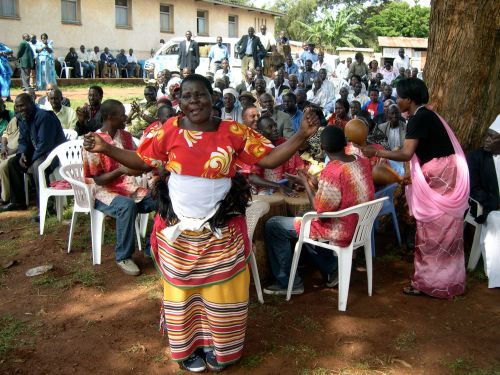
I haven’t posted much lately, and that’s because I have been too busy traveling.  In late February, I attended an annual meeting of Uganda n’eddagala lyayo (Uganda and its medicines), Uganda’s oldest association of traditional healers.  The group entertaining the crowd that day was led by one Nakayima, a singer who has since become my dear friend and close research consultant.  She has been an excellent travel guide for some of Buganda’s historically significant ritual sites.

nakayima

This weekend, I begin recording some of her vast repertory of ritual songs sans drums and rattles.  That technique has worked well for me before as a means of getting a clear rendering of the song texts, so I am excited to begin.  In the mean time, I hope you enjoy these stories and images from our travels.

These places and their stories live and breathe in oral tradition, but this is a part of the world where people don’t depend on Jan Vansina to tell them that those traditions constitute this region’s historical records.  The characters and themes of those storied places appear in Nakayima’s songs as well.  By taking me to see these places and meet the people who take care of the shrines, she provides me with critical context for understanding her repertory of ritual songs.

1 Comment

Filed under uganda

Respite from Research

16 March 2009

Prior to embarking on my field research, a colleague advised me to pick a day every week and do nothing.  “You’re on all the time,” she said, “whether you want to be or not.”  I rarely take an enitre day off, though I have been known to rent movies on Sunday afternoons or go out to a bar on occasion.  I live by what I believe to be a more pragmatic method of balancing work and play: when I need a break, I take one.  No matter how you slice it, fieldwork is tiring, and I do feel a certain vigilance toward mundane details that wouldn’t otherwise make it onto the radar.

Needless to say, when it came time for my wife Jenn to visit Uganda, the specter of respite from research never looked more attractive (literally).  While nothing can force a complete shutdown of ethnographic tendencies to observe and analyze, having a loved one around certainly makes those habits more entertaining.  This break from routine also gave me the opportunity to see some things I would not have sought out on my own in Uganda, to get a more comprehensive view of the country.  It also brought us into contact with a community of tourists and other bazungu (white people) who reminded both of us how obnoxious we must appear to locals at times.

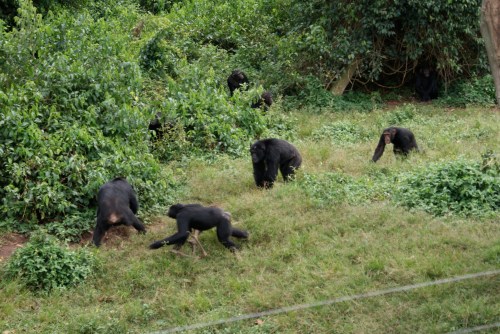
Jenn arrived in Entebbe late in the evening on Sunday, March 1.  We decided to stay in Entebbe for a couple of days and check out the scenery there.  It turned out to be a great idea, as Jenn had time to relax after a long flight and we made our way to see some pretty cool wildlife there.  Among the highlights, we went to Ngamba island to see a chimp preserve.  Here’s the alpha male, whose minions are beating the path before him:

alphamonkey

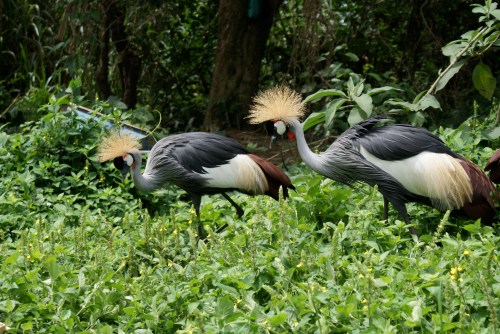
We also saw a really beautiful symbol of Uganda up close: the crested crane.

crestedcranes

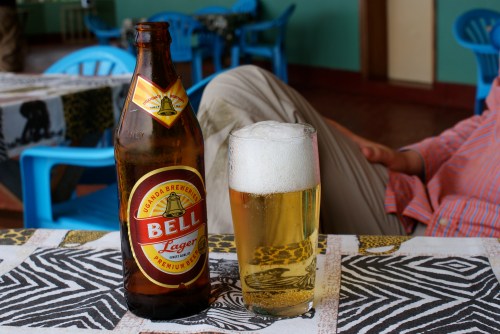
The cranes were kind of the last stop on our tour of the Entebbe Wildlife Education Center (something the rest of the world simply calls a zoo).  So we took a break from walking for Jenn’s first of many stops on the Uganda Beer Tour!

bell

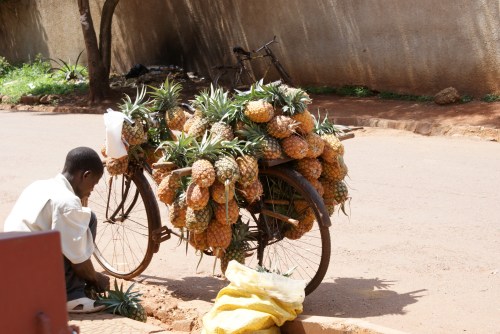
These were just a few of the highlights of a fun couple of days in Entebbe, where Jenn also got her first taste of local food and food transport logistics:

pineapplebike

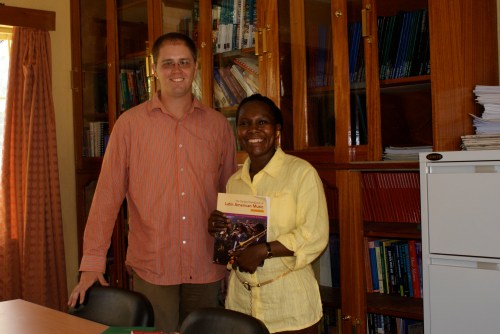
One of our first stops in Kampala was the Department of Music, Dance, and Drama at Makerere University.  Continuing a special project to build a reading room collection there, Jenn helped out by bringing a suitcase worth of books with her.  She was able to bring some really nice materials, including the new Garland World Music Handbooks.  She photographed Dr. Sylvia Nannyonga-Tamusuza here, where we’re pictured with Dale Olsen’s contribution to that Handbook series.

pnswdalebook

Once again, we enjoyed the good fortune of safe arrival for all of the materials, which will now be catalogued, stamped, and shelved with the rest of MDDs growing collection.  The reading room is starting to run short of space already (a great problem to have), but Dr. Sylvia tells us that the university seems interested in backing a new building project for MDD.  Hopefully that would include more library and research space.

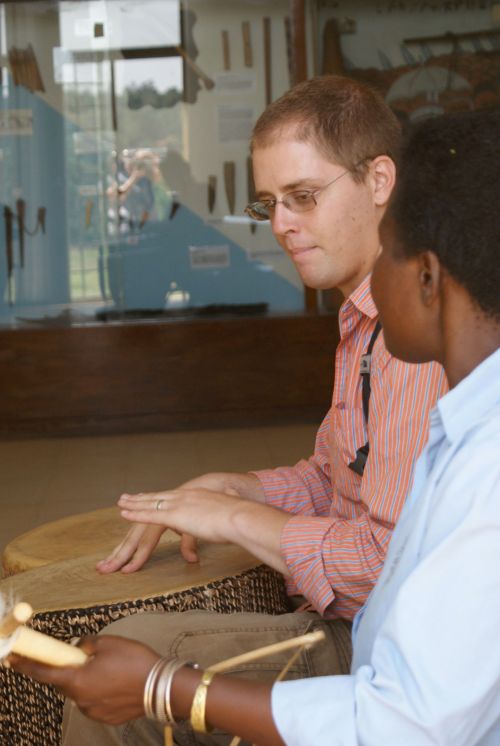
After the MDD stop, we checked out Kasubi Tombs and the Uganda Museum.  Both are kind of off the beaten path for tourists, but they’re interesting stops along the way.  There are always musicians at the museum.  Here’s one of me playing with a lady who’s fiddling on an endingidi (single-string tube fiddle).

museumdrummin2

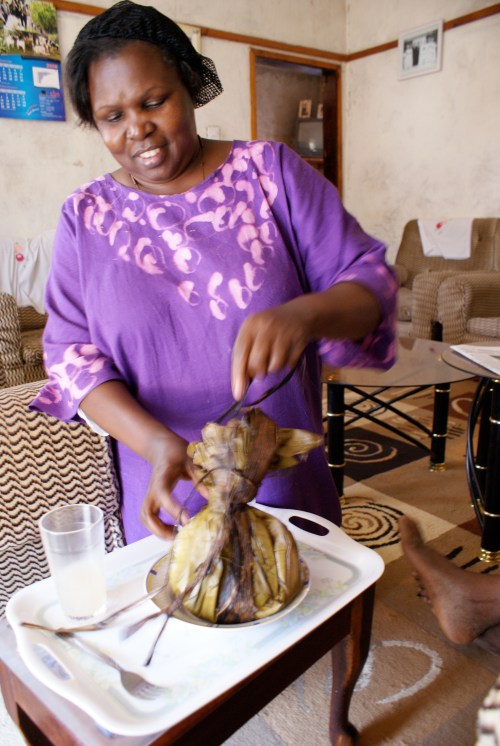
At week’s end, we joined my host family in Ntinda for some traditional fare so they could meet Jenn for the first time.  We all had a lot of fun, and they even made a cake for the occasion.  They also made a real Ugandan specialty: Luwombo.  It’s really nice, tender cooked meat inside a banana-leaf package with good sauce.  Yum!  Here’s Mama Magoba opening up her home cookin’ for my mukyala (wife):

mamaluwombo

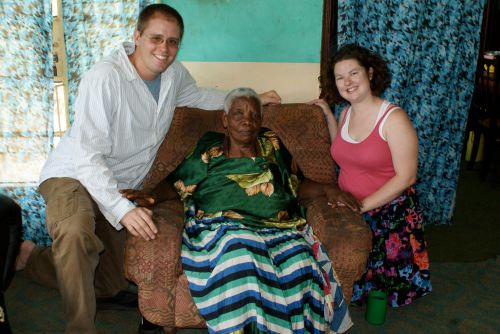
The next day, we went to see some more family at Kawuku.  It was time to meet the bajjajja (grandparents).  We had a nice visit, though unfortunately we excluded Jenn by default since they speak exclusively Luganda.  Nevertheless, it was fun for her to try out her new greeting skills in the local language.  Here we are with Jjajja Mukyala (Grandma):

jpjajja

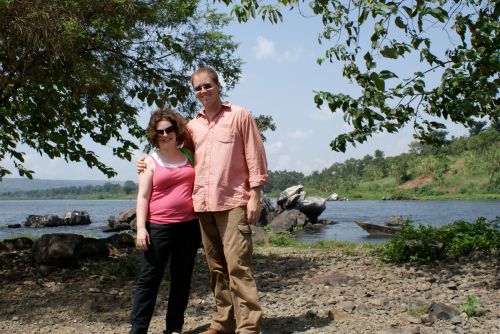
We spent some time shopping in Kampala, but the next week we had to make sure to visit Busoga.  We tried to visit a field colleague with whom I’ve done a lot of work, but it turned out he was busy, so we ended up in Jinja.  We’d planned to see some things there anyway…we ended up going to the essential Jinja attractions, namely Bujagali Falls and the Source of the Nile.  Here we are at the Source, on a break from a really nice boat ride:

jpsource

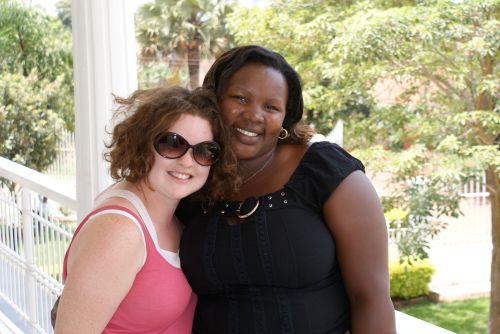
While in Jinja, we stopped by mwanyinaze (my sister) Gloriah’s place of work.  It’s a really nice place called Children’s AIDS Fund, where she does noble work with HIV/AIDS patients.  We got a chance to check it out and then go out for some nice muchomo (roasted meat) that evening.  Here’s Jenn with Gloriah at her workplace, which incidentally is not far from the Source of the Nile:

jenngloriah

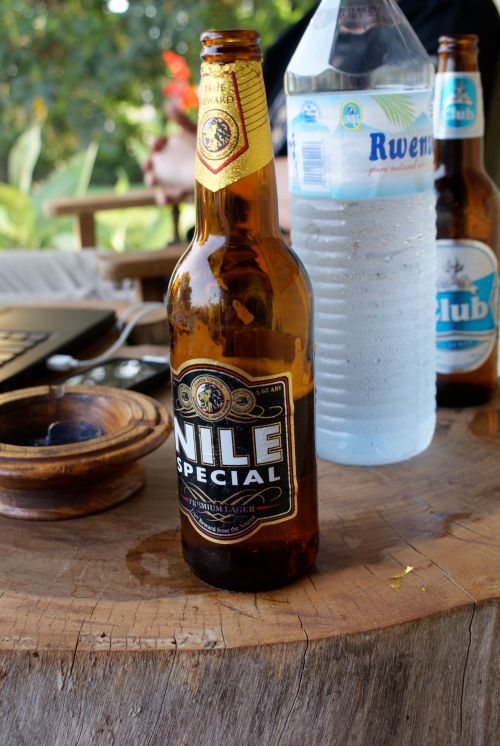
We spent some quality quiet time by the banks of the Nile at a place called Gately Inn.  We had enjoyed the same company’s hospitality in Entebbe, so we tried to check out the Jinja version, and we were not disappointed.  That close to the Source, Jenn’s next stop on the Uganda Beer Tour had to be the True Reward from the Source: Nile Special.  You’ve earned it, Jenn.  You’ve earned it.

truereward

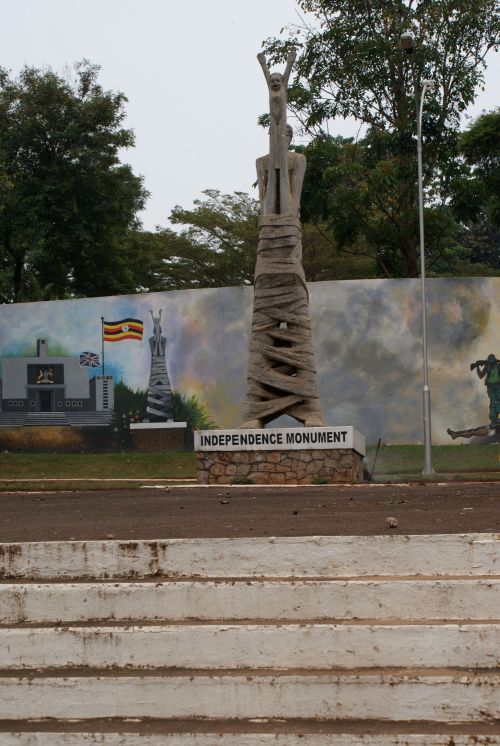
It was back to Kampala then, for a couple of days of R&R before Jenn had to go back.  That’s exactly what we did: sat by the pool at the hotel, finished up some shopping, and ate at some yummy restaurants in Kampala.  One of the last things we saw before she left was the Independence Monument.  I pass by it all the time, as it’s right in the middle of town, but I rarely stop to take notice of what a beautiful sculpture it is.

independence

So with that, it was goodbye Fair Kampala for Jenn and back to work for me.  More about the recent research developments to come…

2 Comments

Filed under uganda

Overdue Update

Dear Friends, these next few posts have been post-dated. I’ve written them primarily offline, but haven’t had a chance to post them until now (or, when I have, I’ve had internet connectivity issues). In any case, thanks for sticking with me…enjoy catching up on the last few weeks!

Leave a comment

Filed under uganda