Solid Drummer, Fine Teacher in Nakifuma

Three and a half years ago, when I first came to Uganda, I had the honor and pleasure of being the best man to a couple of the sweetest Baganda I have ever met. They have been so generous to me over the years, as colleagues, teachers, and friends. One of the greatest gifts they have given me is to introduce me to other friends and teachers who have so much to offer.

One of the drummers at their wedding was the most amazing Muganda drummer I had ever seen. Three years on, he’s still the best I’ve ever seen. I now have the privilege of calling this man my teacher. Meet Frank Ssematimba.

“Uncle Ssema,” as his friends call him, has been playing with different music & dance troupes for a long time. I first saw him with Badongo dancers, a group that a famous musician named Ssalongo Deziderio Kiwanuka Matovu started years ago. Ssalongo didn’t perform with them that night, which is probably good because I would have been completely distracted by Ssema’s drumming and its connection to the wedding dances.

Now he plays with a troupe called “Nakifuma Super Dancers,” led by one Albert Bisaso Ssempeke. Albert is the heir of one of the best known Muganda musicians, another of Ssalongo Deziderio’s generation. This group he’s put together has the best percussion battery I’ve ever seen, led by none other than Uncle Ssema. I had occasion to play with them at a couple of events over the last six weeks or so, and at the second one Uncle Ssema announced to me that he was going to teach me mbaga variations on embuutu drum. How could I argue?

A week later, I start going out to Nakifuma, a dusty 90-minute ride east of Kampala, for drumming lessons. I find Uncle Ssema there, comfortable in the shade of a mango tree that graces his front yard near the road. He sets up a bench with a tarp in front of it on which we set the mbuutu. We begin with the only familiar thing that I’ll play in the lesson: the first of many variations for mbaga dance. He takes me through as many variations as my hands can handle that day, and then he plays a whole bunch more as if to say “you have a long way to go, kid.” But he’s courteous about it–not ruthless like some teachers.

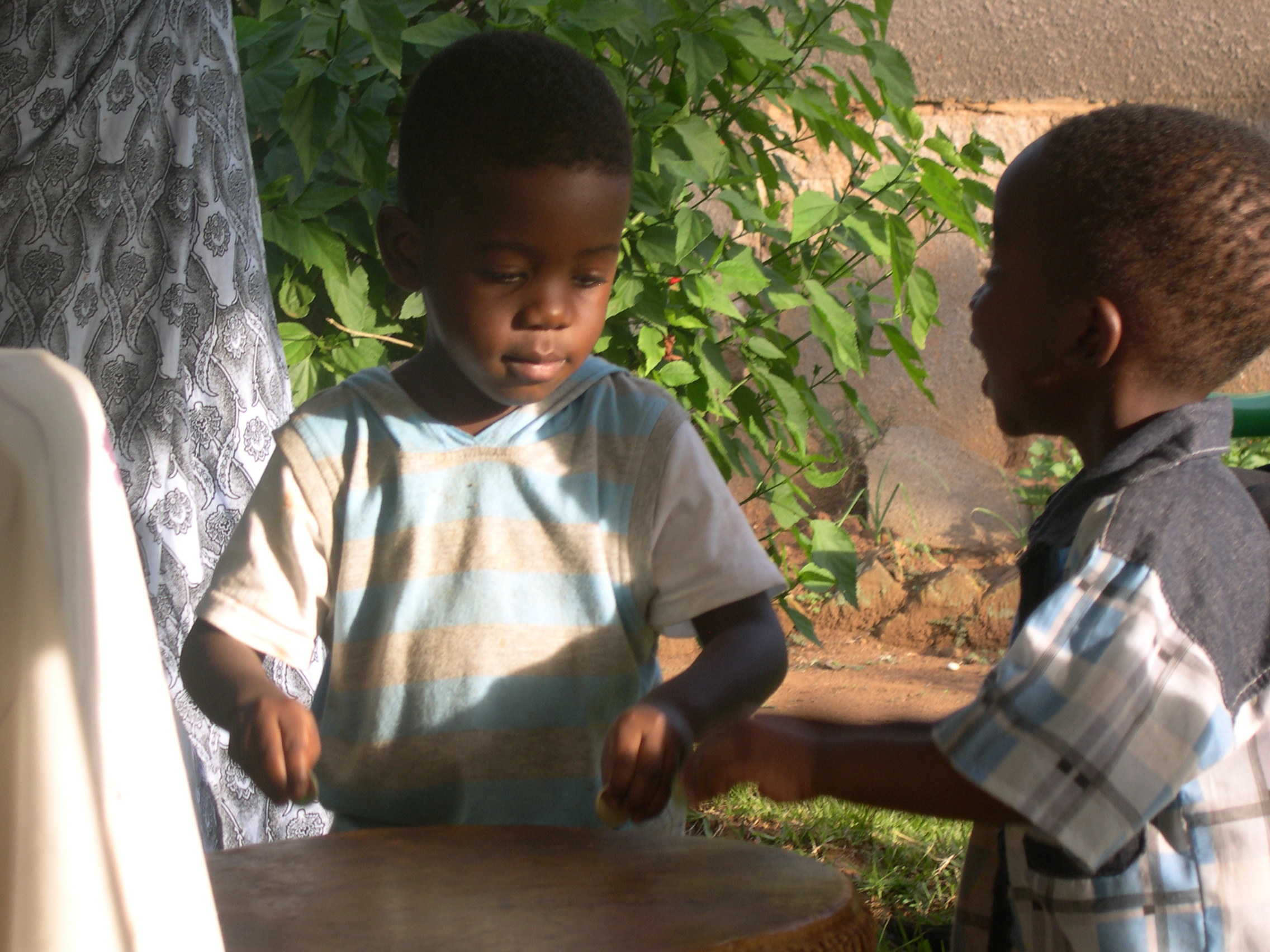
Uncle Ssema seems to understand my process, and why it is I want to learn, and he likes it. When the little kids get in the way of my recording device, he gently nudges them away and we continue. They clearly love him, and they’re fascinated by this whole process. He’s only slightly more reserved about his own fascination, but when it comes to hearing the playback of our recordings, he doesn’t hide it. That makes for a very open process. Often when we’re finished with the drumming part, he’ll play a few tunes on his ndingidi, a single-stringed fiddle. There are a few really discernible styles on this thing, and his is much like his teacher, Deziderio’s. Even the way he sings is similar. It’s cool to see the next generation of Baganda musicians so eager to share their music. It’s a pleasure to listen and a privilege to learn with this guy.

1 Comment

Filed under uganda

LUTHA: Young Healers in Song

It was almost a year ago now that I posted about the meeting of Uganda n’eddagala Lyayo, the oldest healers’ association in Uganda, and their annual meeting at Mengo. This past weekend, I attended the annual meeting of one of Uganda’s youngest healers’ associations, the Lubowa Traditional Healers’ Association (LUTHA). I met their director last week, and he’s an incredibly warm young man named Hassan. I still cannot fathom why he wouldn’t have joined the much older association in his sub-county, PROMETRA, which has ties to an international NGO and great funding opportunities. Still, it seems this young group is building its own capacity for service to its community and potential for funding.

My preliminary trip to Walugondo village was meant to introduce me to this community and their musical activities. The rehearsal was a gas, complete with stilts!

Some of us with a bit less experience even got some drumming time in:

The later meeting on Sunday was a good opportunity to see how healers are aligning themselves with NGOs and local government authorities. After a lot of speeches and laments about the lack of government support for research and development of traditional practices, all present were glad to see an American researcher taking interest. Last year I attended meetings at the Ministry of Culture that made it seem like the central government would be more involved in regulating or at least researching these healers and their associations. However, a year on, it seems like they are less interested than local government officials would like them to be. These are the people who are indeed rooting out charlatans and ensuring the continuing good reputation of the healers who are legitimately trying to help their communities.

Speeches from the LC1 (village level) chairman and the LC5 (district level) chair and vice chair preceeded a speech by a Minister of Parliament. Whether they will stay committed beyond a small cash donation or attendance at this event remains to be seen. For the time being, however, it is enough for LUTHA to have garnered their attention. I hope to meet with the LC5 chair and vice-chair next week and ask them how exactly they use this kind of information, how they advocate for healers and their groups. A ride home with the Minister of Parliament gave me opportunities to ask similar questions of her. I think she genuinely wants to advocate for these folks before Parliament, but that body has its own regulatory agendas through the Ministries, so she has to work within those confines.

Ultimately, these associations link local dialectics of wellness, which music facilitates and articulates, with broader discourses on policy and the value of indigenous knowledge. They are valuable in this way, and they promise to continue in this role whether governments recognize them or not. Uganda has an under-utilized treasure here in that these are the people who provide primary medical care and support for a broad range of basic services that are as accessible as they are affordable for the general population. Moreover, these services are culturally relevant to the people. Can government bureaucratic appendages realistically expect to wrap their support around this in a way that doesn’t choke its creative fluitidy?

2 Comments

Filed under uganda

A Giant in African Music Falls

Sometimes a scholar of African music has such a profound effect on the field that when we hear people mention his name, there’s a certain reverence to it.  Sometimes I see a presentation that shows such humble respect for the musicians and such dedication to understanding their artistry that it makes things seem as if they should always be that way.  Every so often, I encounter a scholar of such generosity as to show deep care for a student whom he has only just met.  This past year, that was Dr. Willie O. Anku.

I had the distinct pleasure of presenting a paper on the same panel with Dr. Anku at the 3rd Annual Festival and Symposium, Dialogue in Music Project: Africa Meets North America.  He gave the most inspiring 30-minute breakdown of West-African rhythm that I have ever seen.  Although he’s been studying and writing about this material–what he called “circles and time”–for years, he presented it with almost child-like fascination in an analysis completely devoid of ego.  Following the panel, there was no question he didn’t have time for, and he went out of his way to complement and question my work. As the conference went on, our interactions only became warmer. I had found a fast friend in this brilliant man.  It was truly a privilege to enjoy his company and learn from him.

Dr. Anku earned an M.M.E. from the University of Montana at Missoula in 1976.  In 1983, he founded the African Music & Dance Ensemble at the University of Pittsburgh.  He went on to earn an M.A. in Ethnomusicology from the University of Pittsburgh in 1986 and and Ph.D. from the same institution in 1988.  He returned to his native Ghana to teach in and then head the Music Department at the University of Ghana, where he eventually headed the entire School of Performing Arts.  He was also a visiting professor at the Simon Fraser University, Burnaby, BC, Canada (2004), Portland State University (2003), and at California State University-San Marcos between 1994 and 1996.

On January 31, 2010, Dr. Anku was in a serious car accident. No doubt he would have contributed many more years of brilliant scholarship to the study of African music.  Willie Anku died on Monday, February 1, 2010.  I mourn his loss, even as I know the lasting legacy he left for the next generation of African music analysts.  Willie, you will be missed.

11 Comments

Filed under Uncategorized

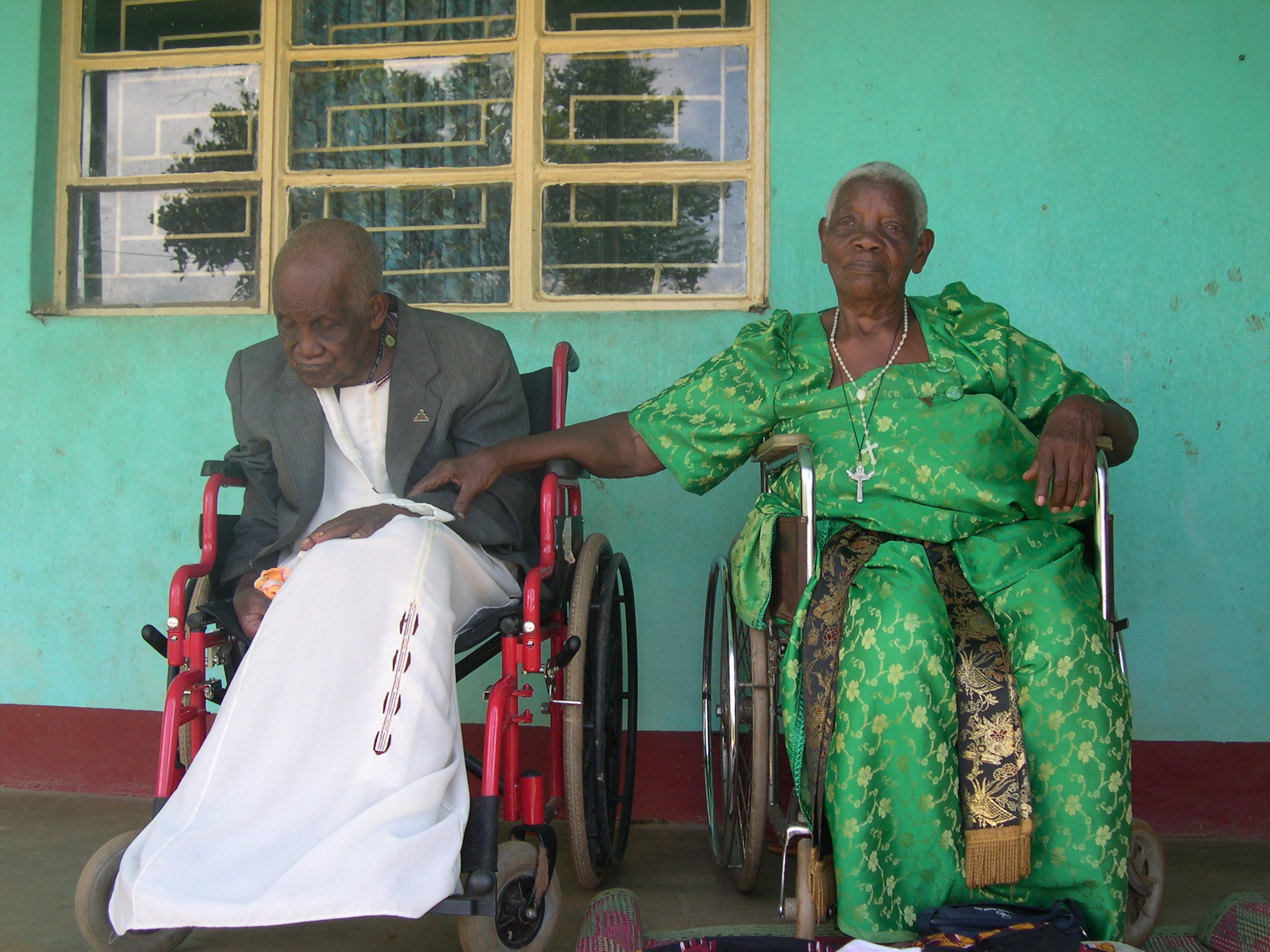
Jjajja Kaweesa Turns 100

The other day I went out to Kawuku with my Ffumbe folks from Ntinda.  Every once in a while we get an opportunity to see those who can come together in this family at a single event.  Last year it was about 100 people, and today is about the same.  At one point, I think about trying to count the grandchildren and great grandchildren of Jjajja Mukyala (Grandma) Rose and Jjajja Omwami (Grandpa) Kaweesa.  Then it occurs to me that at least half of them live elsewhere in the world.

I’ve only ever been to one other 100th birthday party, and that was for my great-grandmother Anna.  It’s always an interesting experience to consider the changes that someone that old has seen in a lifetime that long.  At this point it’s enough just to consider that this family takes such good care of their grandparents.  It’s inspiring.  I’ve included a few of the photos below just for fun.

The Bajjajja at Kawuku: Jjajja Omwami at 100 and Jjajja Omukyala at 88.

The bazuukulu (grandchildren).  Spot the muzungu?

Sister Francis was also celebrating 50 years as a nun!

Some aspiring drummers of the next generation…

A few beers and some roasted chicken on this sunny afternoon really hit the spot.  Jjajja Kaweesa went to sleep early in the comfort of knowing that his next three generations were enjoying the lawn.

3 Comments

Filed under travel, uganda

Haitian Trauma, Haitians in Song

My wife sent me this footage of Haitians in song.  I don’t have words.

Leave a comment

Filed under art & politics

Homecoming (of sorts)

So it’s taken me some time to get back into the swing of things enough to post.  It’s not for lack of something to write about.  On the contrary, the first two weeks have been full.  I’ve been so busy attending rituals and thinking and writing and transcribing…there hasn’t really been much time for blogging.

Maybe it’s appropriate then that now I do have a little time on the day I went to my Ugandan host family’s place near Ntinda.  I had been biding my time until most of the family could be there.  What a happy afternoon!  Mr. Magoba invited me for lunch, but they all knew as well as I did that it was a leisurely affair that would take all afternoon.

Lunch was fantastic as usual.  Local food really is good in Uganda.  Maama Magoba’s food is a whole new level, though.  I eat matooke almost every day here.  Some people would get sick of it, but I really like the stuff.  Today, Maama’s tooke was really a cut above anything I’ve had since I got back here.  That set the tone for the whole visit.

This really was a homecoming for me.  Don’t get me wrong: I love my family in the States.  When people make me feel this at home when I’m this far from home, though, that’s a really special thing.  I realized this morning that I had been eagerly anticipating this for two weeks.

I always bring gifts for my family and friends here.  This time my wife sent me with really nice gifts for the ladies in the family.  Maama got two necklaces, and she absolutely loved them both.

Gloriah’s necklace is going to go well with her newest pink gomesi (local nice dress for women here).  People really like to match things up exactly here.  Needless to say Sister Glo was elated.

\

Then there’s Nantongo.  This girl took such great care of me when I was here last year.  She’s the girl who cooks and does much of the laundry in the Magoba household.  We call her Nakinyonyi (Big Bird) because she’s always smiling.  She nicknamed me similarly as Ssekinyonyi (Big Bird, the male version) last year.  After greeting Mr. and Mrs. Magoba properly, she came out of the girls’ room there and shouted,

“Ssekinyonyi!”

How great to see my good friend again!  I don’t think she expected much of anything from me, but she’s part of the family.  Jenn really made a cute necklace for her with little blue stars and some clear beads.  It was like watching a child on Christmas morning.

Settimba and some of the others weren’t there, but I will see them soon.  In the mean time, it was really cool to see Mr. Magoba with his bazuukulu (grandkids).

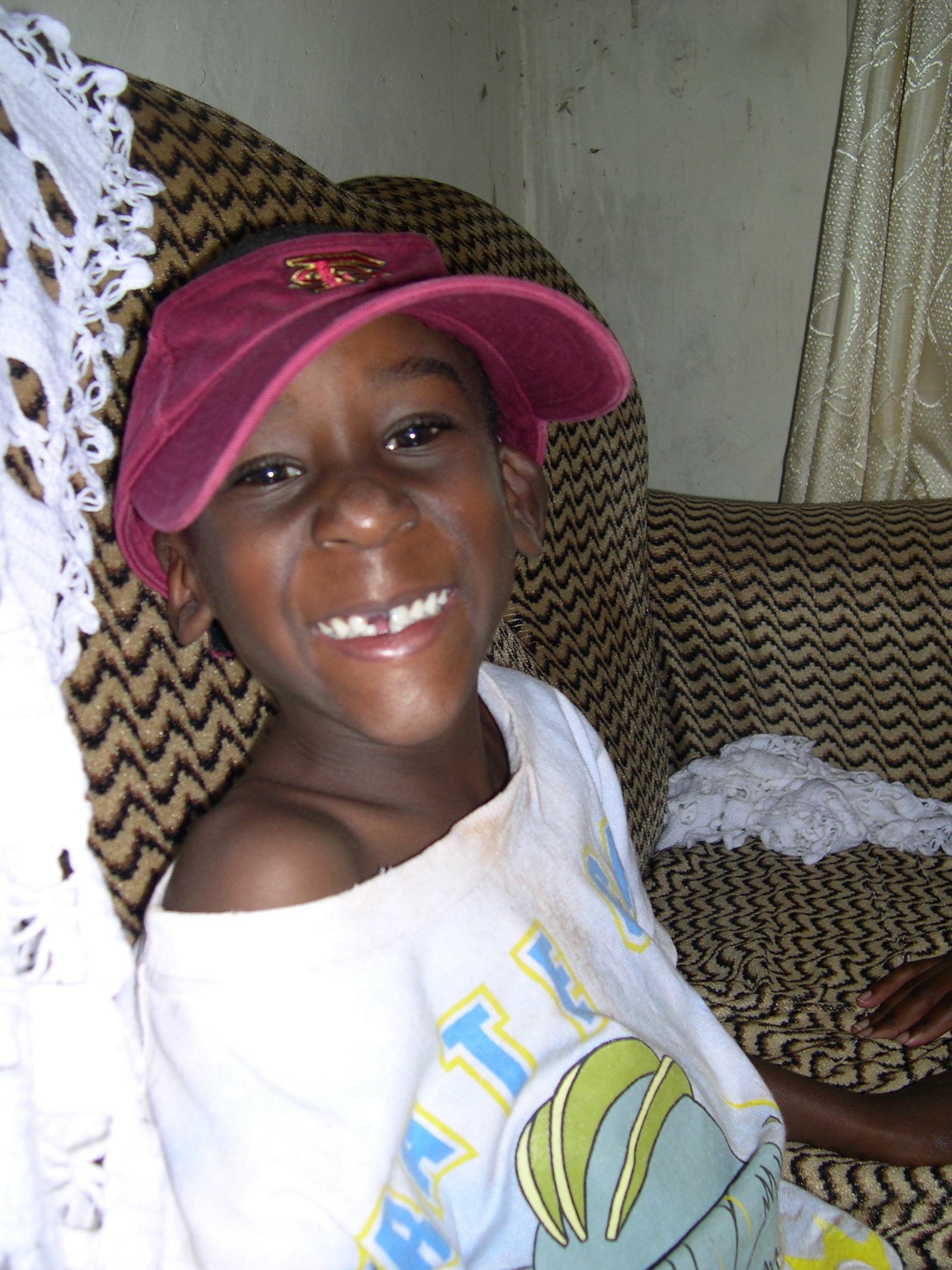
At age 6, Mugumya is a total Curious George with a priceless gap-toothed grin (akazigo).

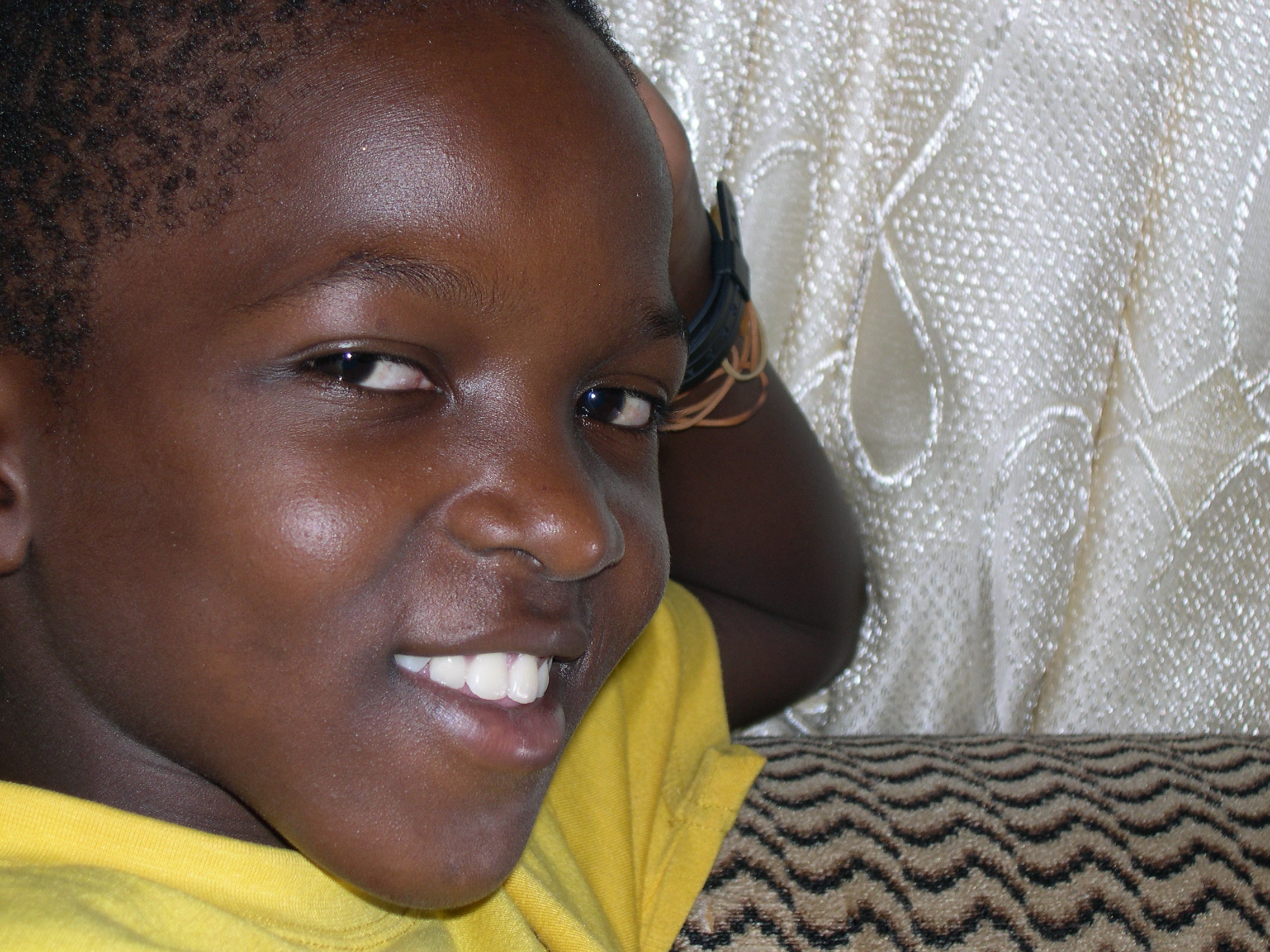
Then there’s Vincent (in the yellow), who can really school Uncle Kigozi in soccer.

As we relaxed after lunch and drank some of Maama’s homemade pineapple wine, they invited me to three upcoming family events.  Among these, Jjajja Omwami Kaweesa (Grandpa Kaweesa) turns 100 this month, and we’re going to celebrate with a big family reunion on the 26th.  I’m so excited.  These are the people who initiated my linguistic and cultural education in Uganda.  Now that I’ve been coming here for three years, they are still the people who teach me most about language, culture, and how a family lives together here.

When Jjajja Kaweesa prays, he still thanks God not only for all that he has, but also for all of the blessings that he has yet to receive in his life.  It’s such a hopeful outlook.  Maybe this is how a person lives to be 100 and has the riches of family that he has.  This is how a coffee farmer in Uganda and his wife educate their 11 children, 10 of them through university level, and several through post-graduate studies.  Now that he’s dependent on them, it’s inspiring to see that he still lives in his own home, where his children and grandchildren take care of him.  This, I have the privilege of saying, is my family in Uganda.

4 Comments

Filed under travel, uganda

The Road (back) to Uganda

International travel offers some prime opportunities for people watching.  If Garrison Keillor is right about being part of a throng as one of the essential experiences of being at the State Fair, each airport is a new State Fair of humanity.  The sounds of people speaking different languages disorient us, the smells of various things good and bad annoy, delight, and disgust us.  I always love how the Memphis airport smells like a BBQ pit.  It brings the comfort of knowing that there’s a vendor nearby hawking something tasty on a stick or a bun.  Then there’s the guy who stops by a small construction area in DFW International to relieve himself…twenty meters before the restroom ahead of him.  How about the only flight attendant aboard the plane who wears corn rows referring to herself as Ms. Chocolate?  Endless sources of amusement all.

Now I’m in Uganda, where I get watched and cajoled and laughed at by strangers who enjoy watching people as much as I do.  I’m okay with that.  Then they’ll be the ones who get to pretend that their version of humanity doesn’t seem just as ridiculous to someone as mine seems to them.

1 Comment

Filed under travel, uganda

Avatar and the Misunderstood “Clash”

My wife and I just saw Avatar.  When the movie first came out, we both heard the “All Things Considered” interview with James Cameron and the one with the linguist who wrote the Nav’i language and we both saw some mainstream press.  The reviews have not been surprising: in the tech-happy camp, excitement about the special effects overwhelms, and among self-fashioning sophisticates the characters are too one-dimensional and underdeveloped. In retrospect, it seems strange that it took some convincing for these two art and music enthusiasts to make this our holiday trip to the theater.  In the end, the good stories could be rented, but this one had to be seen in the cinema.

Okay, so the special effects were great.  James Cameron is the reigning king apparent of 3-d cinema technology.  Good for him, and even better for his studio, because that stuff is nearly impossible to pirate.  Hope you can send your great-grandchildren to college, Mr. Cameron.  With due respect, though, I thought there were many more interesting features to this film.

Avatar offers a commentary on the nature of conflict in a context that holds up particularly uncomfortable mirrors to human nature in particular.   Says the admittedly flat “noble savage leader” to Jake Sully, the human protagonist: “We shall see if you can be cured of your insanity,”

In this picture, Sully’s perceived insanity is borne of the peculiar marriage between military structures and corporate goals.  Whereas Joel Bakan and friends insinuated of the corporate collective personality in The Corporation,” Avatar proposes something even crazier: a virtueless corporate machine with serious military artillery.

Far from one-dimensional, Sully can see this insanity plainly, even as he matter-of-factly explains its ethical inconveniences to the bleeding-heart scientists.  “That’s how this works,” he shouts.  “Somebody’s got something and you want it, so you blow the hell out of them and then justify it.”  It’s ambiguous where the corporation in the movie is from beyond being earthlings, and the script never clarifies what country all of the former military personnel served.  I don’t think it’s a stretch, however, to assume that this American movie with American accents comments on American realities both historical and present.

For nearly a decade, the Bush administration justified oil and control-seeking behaviors in the Middle East with phrases like “defending liberty,” “promoting justice,” and “delivering freedom to oppressed people.”  It’s no coincidence that Hollywood continues to call them on it.  At present, the world struggles to understand the paradoxes of a wartime president receiving the Nobel Peace Prize and reflecting on human conflict in his eloquent acceptance speech.  It’s no accident that despite some looming threats to human survival, the theater should offer a forum for critical thought on these issues.

A few years ago, the infamous political scientist Samuel Huntington suggested that the coming conflicts in the world indicated an inevitable clash of civilizations.  Academics and diplomats have rejected this notion outright.  In fact, Florida State University is (was once?) the flagship institution for a multi-lateral cooperation among universities and governments called Alliance of Civilizations.  Still, the ideals of scholars and kings are nowhere near as accessible as the silver screen.  If the characters in this drama have been flattened for the sake of exaggeration, then it serves a purpose: it forces us to recognize the most crass and heartless of human tendencies.

This film has done well and will continue to do well for many reasons.  It offers action for the thrill-seekers, new linguistic puzzles for the self-consciously dorky polyglots who are tired of speaking Klingon, and even some romance (uh, especially if muscular blue alien is your type).  It is visually stunning in 3-D, and would no doubt be even more so in IMAX 3D.  The best reason to see this film, however, is because it makes sci-fi relevant to a broader social discourse on conflict.  When the artistry of a piece in any genre comes together this tightly, when it can make people think after they leave the theater, then it’s a film truly worth seeing.

1 Comment

Filed under Uncategorized

Okay, okay, I’ll try harder…

It’s been almost two months since my last post, and that one was recycled.  I wouldn’t have given a second thought to this, but then people approached me at two separate conferences to inform me that they either follow me on Twitter, read this blog, or both.  Thank you, then, to the few faithful readers who abide long absences and the strange stories that punctuate them.  Despite my best efforts, this blog in both of its forms has been primarily a travel blog that keeps family and friends informed of my activities.

C’est la vie!

Alas, I am about to embark upon the final phase of my dissertation field research.  So thanks as well to the American taxpayers, who will underwrite this most recent portion of the project.  So, as usual, I will undertake this portion of field reflections as a less formal form of fieldnote.  I leave in a little less than a month.  Enjoy the ride!

Until then, it’s Christmas photos, hopefully those featuring my dog in various ridiculous costumery…

Leave a comment

Filed under travel, uganda

On the Laughter of Children and the Value of Play

Recently the Society for Ethnomusicology (SEM) quarterly newsletter published a short piece that I submitted based on an interesting experience I had during field research earlier this year.  Only SEM members could see that version, so I thought some folks might like to see it here: the text appears below, followed by some follow-up commentary.  I also dig the colorful Nc20909 as it originally appeared.

Introduction

Childhood and children, as topics of ethnographic research and representation, do not appear at all on graduate reading lists today.  This want of attention to our own passage, this willful looking-away from ethnography’s mirror, must say something about us.  Interbelline anthropologists, such as Malinowski, Fortes, Firth, Richards, and Evans-Pritchard, observed children in the contexts of kinship, ritual, education and socialization (Levine 251).  Mead believed in the potential instructiveness of childhood studies, characterizing “world cultural variation in child rearing as a laboratory in which ‘thousand year’ experiments were being conducted by different peoples.”  Ethnographic fieldwork in distant places could be “brought back to the Western world for the resolution of issues like whether ‘permissive’ rearing was advisable for US middle-class children” (ibid. 250).

The contributor of this edition of nC2 puts children at the center of the ethnographic record, as felicitous music teachers and as agents in his own enculturation process.  His is a willing looting-to that invites reflection on our filed practices.  Is the way we deal with children in the field a meme of “table etiquette,” whereby they “don’t speak unless spoken to”?  Taken at face value, without a reader’s compensation, their invisibility in published studies presents much of the world as eerily barren of children.  -Jesse Samba Wheeler, Co-editor, Nc2

Reference cited

Levine, Robert A.  2007.  “Ethnographic Studies of childhood: A Historical Overview.”  American Anthropologist

109(2):  247-260.

On the Laughter of Children and the Value of Play

by Peter Hoesing, Munamaizi Village, Namutumba District, Eastern Uganda, January 20, 2009

It is possible, if not inevitable, to be so focused on a particular person or event of interest in our fieldwork that we overlook other potentially instructive opportunities.  Children can all too easily be relegated to ethnographic peripheries.  I offer this reflection[1] as an urge (as much to myself as to others) to embrace the playfulness of fieldwork by approaching children as partners and peers in enculturation.

Much of the day has been spent watching the clan elders build small mud brick huts for ancestral spirits.  I haven’t heard much music.  Mwesige knows how interested I am in ritual drumming and song.  He asks me late in the day if I would like to play drums with him.  We play for about an hour, and people respond favorably.  Children watch closely.  They never play until their teenage years, but I can tell that they soak up a lot by watching and listening long before that.  They know the rhythmic idioms well.  When I play something that’s out of character with nswezi idioms, they respond with laughter.  As long as I stay within idiomatic boundaries, they watch me like they watch other drummers: with wide-eyed fascination.

Drumming lessons in Eastern Uganda provide me with learning experiences in the ethnomusicologist’s ideal classroom: the same place where my field consultants and teachers learn.  As people gather to watch possession ceremonies, drummers offer children their first opportunities to get close to the action.  Adults are so spatially focused on gathering around the spirit mediums to sing, shake rattles and promote possession that young people cannot see what happens inside that circle.  Newer to these performances than many of the children, I join them and use drumming to gain access to musical dramaturgy.  The laughter of children as they observe my lessons acts like an idiomatic boundary between what I can and cannot do in terms of rhythmic variations.

There’s one particular rhythm that I’ve been trying to get right for several days now.  Even when I play all of the variations progressively, this one rhythm continues to give me trouble. “You’ll get it,” says Mwesige as he keeps playing.  After several unsuccessful attempts, he walks away for a bit.  The kids laugh.  With each unsuccessful try, they laugh again, especially after I realize this and playfully digress into something completely out of character with the music.  One of the children picks up his sticks and plays his rhythm on the smallest drum (is this kid mocking me?)  His enormous grin reminds me not to take myself so seriously.  I play along with him for a bit.  Something seems to click, but I can’t put my finger on exactly what.  I take a look at my transcription before asking Mwesige to come back one more time.  I’ve corrected something and found a rhythmic hook to hang my hat on in terms of left hand playing.  I’ve been focusing too much on the right hand and not really thinking about this in the left-handed way that Mwesige works with in all of his playing.  When he comes back, I get it right immediately and then stay on it for a bit just to solidify it.  The kids love it, but they don’t laugh—they clap.  So do the ladies.  Those who have rattles shake them vigorously and many women ululate.  I decide to relish my success and quit for the day while I’m ahead.

By paying attention to this mode of reaction among the children, I continue to develop my ability to play idiomatic variations for nswezi possession rituals.  When my teacher leaves me to figure something out on my own, the laughter of children guides my trials and errors until I can get it right.  Their playfulness encourages exploration.  When I forget myself in this kind of play, my hands find new idiomatic possibilities even in places where my conscious mind least expects them.

Ethnomusicologists have spilled a lot of ink about the nature of enculturation, but what can the people in the midst of that complex process teach us practically?  This village classroom reveals many more teachers than the individual who actually demonstrates on the instruments.  The model of neophytes learning from and being initiated by adepts certainly works, and it operates here as well, but it does account for opportunities in which a novice can learn from other novices.  During a day of building and other important non-musical work, musical play offers a welcome diversion for all.  Learning opportunities abound in this ritually sanctioned space for play, but only if I am willing to learn from other learners as I participate in their process of enculturation.


[1]The sections in italics are excerpts from my fieldnotes.

Follow-up

Although Jesse’s introduction provides apt context for this piece, I think there are some notable exceptions to what he’s saying about the absence of children in published studies.  First, what about Ryan Thomas Skinner’s children’s book?  It’s not ethnography, but Skinner is an ethnomusicologist and this book project makes a sophisticated ethnographic commentary on children and enculturation.  What about Kyra Gaunt’s award-winning book?  Moreover, ongoing research on youth cultures might be considered ethnography specifically about children.  The point of this piece, however, is that children ought not be artificially separated from social spaces where we do ethnography.  Their presence and their actions, as the above narrative suggests, are not merely instructive; for the non-native language speaker, they can often be the most accessible point of entry.

I recognize the negative ways this might be read:

Option 1: non-native ethnographer can’t get competence and resorts to hanging out with children and playing off their laughter for lack of something better to do.

Option 2: non-native ethnographer, even if the linguistic competence is there, runs the risk of non-verbal (but nevertheless clear) responses, potentially misunderstanding cues and jumping to hasty conclusions.

These readings miss the whole point of what it means to learn something from a fellow participant in any process.  If the laughter of children and the value of play do not do enough to keep the interest of fun haters shrewd observers, let me appeal to a humanistic cost/benefit analysis: we were playing at the time anyway, learning the parts, and the presence of children and other laughing observers brought immeasurable joy to that self-conscious experience.  I suspect it was that willingness to forget myself for a moment that enabled me to turn my rhythmic thinking around and, in the end, “get it.”

2 Comments

Filed under uganda